How to Verify an OEKO-TEX Certified Workwear Claim Before You Order
An OEKO-TEX certificate confirms that a textile article was tested against STANDARD 100 for harmful substances. It never covers a supplier's entire catalog by default; it applies to one clearly defined article or material. Before releasing a bulk order, a buyer needs to check four things together: the certificate number, its validity, the product class it was issued under, and which components it actually covers.
What does STANDARD 100 actually confirm on a garment?
STANDARD 100 confirms that a defined textile article (thread, buttons, and trims included) was tested for harmful substances. It says nothing about protective performance.
OEKO-TEX STANDARD 100 is a globally consistent testing and certification system for raw materials, intermediate products, finished articles, and accessories. According to the organization, certified components are checked against a list of more than 1,000 potentially harmful substances, and the limit values are reviewed at least once a year.
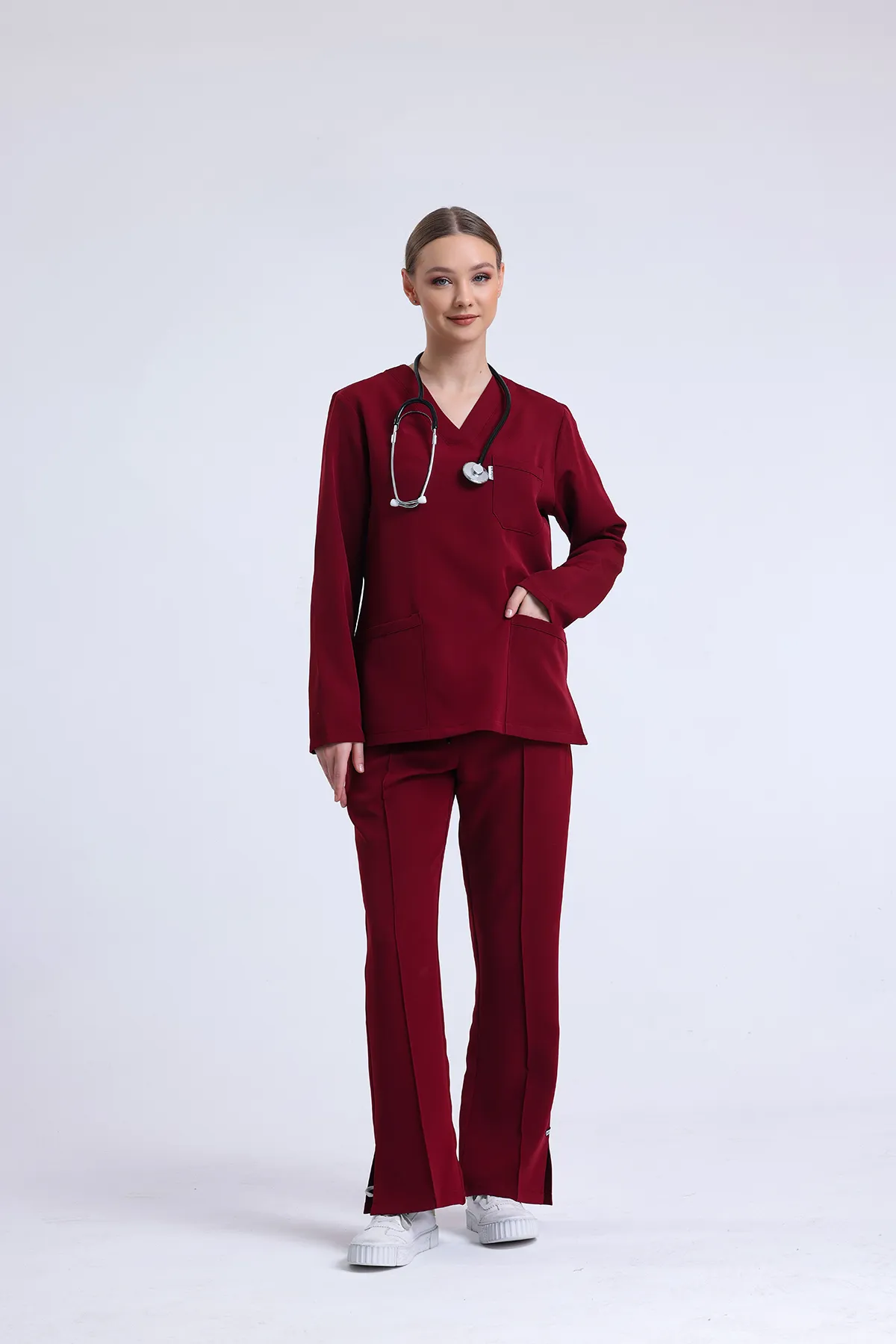
On a scrub top, the relevant scope typically includes the shell fabric, sewing thread, zipper, snap buttons, interlining, transfer print, and embroidery material. A blanket statement like "our fabric is certified" doesn't automatically cover a finished jacket. What matters is whether the certificate on hand actually includes the specific version and trims being ordered.
The standard evaluates human-ecological safety: the possible effects of chemical substances on people. It does not automatically confirm three things buyers often assume are included:
- mechanical durability, tear strength, or wash life,
- protective performance under a PPE or high-visibility standard,
- fair labor conditions, organic fiber content, or an antimicrobial effect.
A harmful-substance test is a supplement to a technical product specification, not a replacement for one. For a more structured approach to larger orders, see the guide to company workwear programs.
Which of the four product classes applies to your order?
Workwear worn directly against the skin often falls under Product Class II, while jackets without direct skin contact can fall under Class III.
STANDARD 100 sorts textiles into four classes based on intended use and the intensity of skin contact. The more sensitive the skin and the closer the contact, the stricter the requirements and limit values become.
| Product class | Intended use | Typical example | Relevance to workwear |
|---|---|---|---|
| I | Babies and children up to 36 months | Baby clothing | Rarely relevant to standard workwear |
| II | Direct skin contact | Shirts, underwear | Can apply to scrub tops, tees, directly worn pants |
| III | No direct skin contact | Jackets | Can apply to outer jackets and shell layers |
| IV | Furnishing and decoration materials | Curtains | Not typically suitable for wearable workwear |
A scrub top doesn't land in Class II automatically just because of what it's called. Actual use, cut, and real skin contact have to match the class stated on the certificate. A top that's routinely layered over a T-shirt can be classified differently than one worn directly against the skin.
Buyers are better served documenting the class that fits the actual use profile than reflexively requesting the "highest" one available. An unnecessarily tight spec narrows the available material pool without adding any practical benefit.
How do you actually verify an OEKO-TEX certificate?
A reliable check covers at minimum the certificate number, status, holder, product class, article description, and whether it matches the goods being offered.
The official OEKO-TEX Label Check lets you look up any certificate or label number. Per OEKO-TEX, the search is spelling-sensitive. If it returns no result, the supplier should provide a clear explanation or a current certificate before the order is approved, rather than letting the order proceed unresolved.
A workable verification process runs on three levels:
- Formal check: Do the number, certificate holder, validity status, and product class all match?
- Substantive check: Does the article description cover the offered fabric, weight, color, and any trims or finishes?
- Delivery check: Do the label, order number, material composition, and batch records match the approved sample?
Even a genuine certificate can be insufficient for a specific order if it only covers a pre-finished component. A certified fabric doesn't automatically make a jacket that's later printed, coated, or fitted with uncovered trims a fully certified finished product.
At TB Uniform, the requested certificate scope is matched against the product specification before material and sample approval. The sample stage typically takes 5 to 7 business days.
Do buttons, zippers, prints, and embroidery need to be covered too?
For finished-product certification, functional components (thread, buttons, zippers, coatings, finishes) all have to fall within the tested scope.
Workwear is rarely made from a single material. A typical piece combines a main textile, closure and reinforcement components, and a customer-specific finish, and logo prints, transfer media, embroidery thread, or coatings can all change the finished article's makeup.
OEKO-TEX states explicitly that on a STANDARD 100 certified article, every thread, every button, and every trim has to be tested. That raises specific questions for procurement:
- Does the certificate cover the finished article, or only the shell fabric?
- Are the ordered color, logo, and finish included in scope?
- Are proofs re-checked when a material or trim changes?
TB Uniform runs printing and embroidery in house. On orders of 100 pieces or more per color and style, material, thread color, logo dimensions, and placement can all be documented as binding in the approval sample.
What the label doesn't prove
OEKO-TEX STANDARD 100 evaluates harmful substances. It doesn't confirm high-visibility class, flame resistance, infection protection, organic origin, or social production conditions.
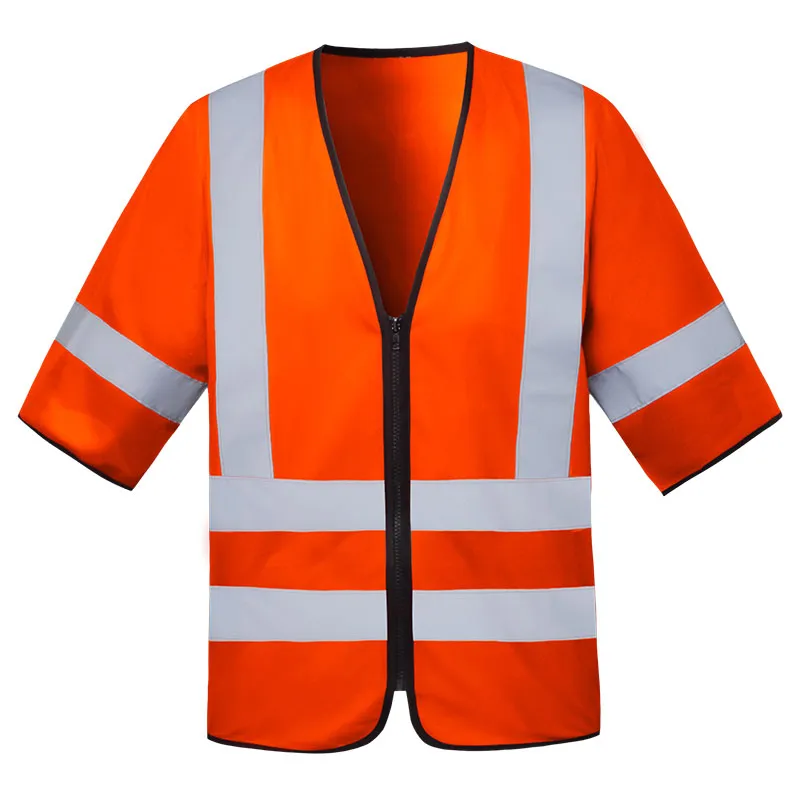
This distinction matters most when workwear also needs to serve a protective function. A harmful-substance test doesn't replace a standard like EN ISO 20471 for high-visibility clothing, and the label says nothing about whether a garment protects against heat, flame, chemicals, or biological hazards.
The word "sustainable" can't be derived from STANDARD 100 alone, either. For textiles made from certified organic fibers, the Global Organic Textile Standard is a different type of proof, while OEKO-TEX MADE IN GREEN pairs the harmful-substance test with requirements for traceable, more environmentally and socially responsible manufacturing. These programs shouldn't be treated as interchangeable.
STANDARD 100 also isn't, on its own, a guarantee of full compliance with the EU's REACH regulation, which governs the registration, evaluation, authorization, and restriction of chemical substances. Buyers should check regulatory obligations, certificates, and technical suitability as three separate items.
What belongs in a checkable RFQ or tender?
A checkable spec ties together at least six items: article, use case, skin contact, material, product class, and required certificate scope.
"Workwear must have OEKO-TEX" is too vague as a requirement. It leaves open which standard, which product class, and how much of the article needs to be covered. A spec built around the actual product should include:
- STANDARD 100, the intended product class, and current valid proof,
- material composition, fabric weight, and color definition,
- certification scope for the shell fabric, trims, and finish,
- size range, measurement tolerances, and labeling,
- care instructions, wash temperature, and any required test values,
- sample approval before series production begins.
The care requirement needs to stay realistic. STANDARD 100 doesn't guarantee a specific number of industrial wash cycles. If shape retention or colorfastness after a defined process is required, that has to be specified and tested separately.
For larger, recurring orders, it's also worth setting a clear rule for reorders, since fabric color, trims, and fit can drift when later batches are produced without a reference sample. The workwear MOQ guide covers order-floor mechanics in more detail.
How do samples and production runs stay locked to the certificate?
An approved sample ties together the certificate, material data, measurements, and logo details before series production begins, usually within 4 to 6 weeks.
Certificate verification should be finished before the sample is made. After that, the approved sample becomes the physical reference for cut, size, color, pockets, closures, and logo execution. Photos alone often aren't enough to compare similar fabric structures or shades reliably.
A workable process runs through three separate approvals:
- Material and certificate scope,
- Cut, measurements, and wearing function,
- Logo, labeling, and packaging.
TB Uniform manufactures in Istanbul and exports to markets across Europe, among others. Monthly capacity can reach up to 50,000 pieces depending on the product group, and once an order is approved, production plus delivery typically takes 4 to 6 weeks. There's no branch office, local warehouse, or short-notice on-site stock for buyers in Germany or Austria.
Quality processes can additionally align with ISO 9001, which sets requirements for a quality management system. On its own, it does not certify a specific article as free of harmful substances.
Buy or rent: which fits certified workwear better?
Buying gives more control over the article and its certificate scope; renting can bundle ongoing laundering and inventory management into one contract.
With a purchase, the garments belong to the company. Colors, cuts, and logos can be set individually within the agreed minimum, which makes it easier to keep certificates, fabric data, and approved samples clearly tied to a specific product. In exchange, the buyer takes on issuing, returns, laundering, repair, and spare stock.
Rental programs, by contrast, can bundle regular pickup, industrial washing, repair, and exchange, though the actual scope of service varies by provider and contract. Mewa's healthcare clothing program is one example of how a textile rental service ties garments and care together operationally. Points worth checking include contract length, circulating stock, loss policies, size changes, finishing options, and certificate documentation.
TB Uniform is a manufacturer and seller, not a rental, laundering, or pickup service. A purchase model tends to fit companies that handle their own laundering or work with a separate textile service, and that also need a customer-specific style starting at 100 pieces per color and version.
What makes an OEKO-TEX workwear order actually sound?
A sound order rests on a verified proof, a matching product class, and a physically approved sample with documented components.
OEKO-TEX certified workwear shouldn't be chosen on the strength of a logo on a spec sheet or a fabric name alone. The proof has to match the specific version being ordered. Product class, certificate holder, validity, colors, trims, and finishes all belong on the same checklist before the order goes ahead.
For standard styles, certified off-the-shelf material can simplify sourcing. For custom cuts, it's worth clarifying separately whether the finished article or only individual components are covered. Protective garments need the relevant performance standards regardless of what STANDARD 100 covers.
A defensible decision ties together three layers: chemical product safety, technical fitness for use, and organizational delivery capability. The guide to sustainably produced workwear covers broader environmental requirements. You can contact TB Uniform for a sample and a quote.
Frequently Asked Questions
Is all workwear made with OEKO-TEX fabric fully certified?
No. A certified shell fabric doesn't automatically mean the finished garment is fully certified. Buttons, sewing thread, zippers, interlinings, prints, and embroidery materials can all change what's actually covered. Buyers should check whether the certificate applies to the finished article or only to a pre-finished component.
Which OEKO-TEX product class do scrub tops need?
Scrub tops worn directly against the skin can fall under Product Class II. If the garment is mostly worn without direct skin contact, a different classification may be appropriate. What matters is the intended use and the article scope stated on the certificate, not the product name alone.
How do I check an OEKO-TEX certificate number?
The number can be entered into the official OEKO-TEX Label Check or scanned via its QR code. What to verify includes status, certificate holder, product class, and article description. If no result comes up, or the scope doesn't match the goods being offered, the order shouldn't be released until it's resolved.
Does STANDARD 100 prove that workwear is sustainable?
No. STANDARD 100 focuses on testing textiles and components for harmful substances. It doesn't automatically confirm organic fibers, fair labor conditions, low environmental impact, or supply chain transparency. Claims like that need separate, matching proof, such as GOTS or OEKO-TEX MADE IN GREEN.
Is OEKO-TEX certified clothing automatically protective clothing?
No. The OEKO-TEX label doesn't confirm protective performance against heat, flame, chemicals, traffic, or biological hazards. If a garment is used as personal protective equipment, it also has to meet the standards and legal requirements that apply to the specific hazard involved.
Should certified workwear be bought or rented?
Buying gives direct control over the style, certificate scope, and custom execution, but requires the company to handle laundering and inventory on its own. Renting can bundle care, repair, and replacement, but comes with contract terms and less product freedom. Which option is more economical depends on usage, circulating stock, and internal processes.
Alt Text
- Checking an OEKO-TEX certificate number for workwear in the official Label Check
- The four OEKO-TEX product classes by skin contact and intended use
- A certified scrub top with documented shell fabric, thread, buttons, and embroidery
- An approved sample for OEKO-TEX certified workwear ahead of series production