Bulk Work Uniforms for Employees Buying Guide
A bulk uniform program works when it is planned by job role: which garment each role gets, in which color, in which sizes, how many pieces per person, and what happens when something wears out. TB Uniform manufactures in Istanbul with a minimum order of 100 pieces per color and style. A sample usually takes 5 to 7 business days; after approval, production and delivery take 4 to 6 weeks.
Which employees need the same uniform?
Group employees by job function and exposure, not by department name or building.
A single company can employ production workers, maintenance technicians, warehouse staff, drivers, receptionists, cleaners, cooks, and medical personnel. There is no reason all of them should wear the same fabric, carry the same pockets, or follow the same wash process.
Start with a role matrix that records three things:
- job function and work environment,
- required garment types and colors,
- any protective or hygiene requirement.
Roles with identical needs can share one style across several facilities. Roles with different hazards should not be squeezed into one garment just to cut down the number of variants.
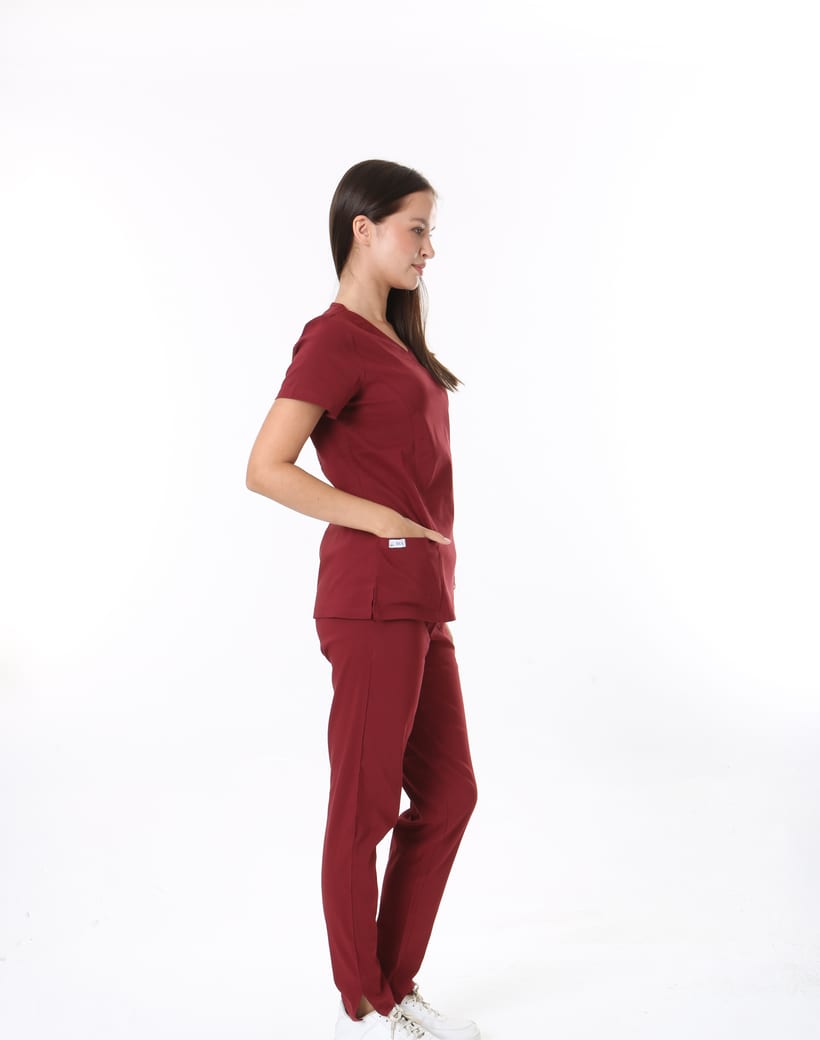
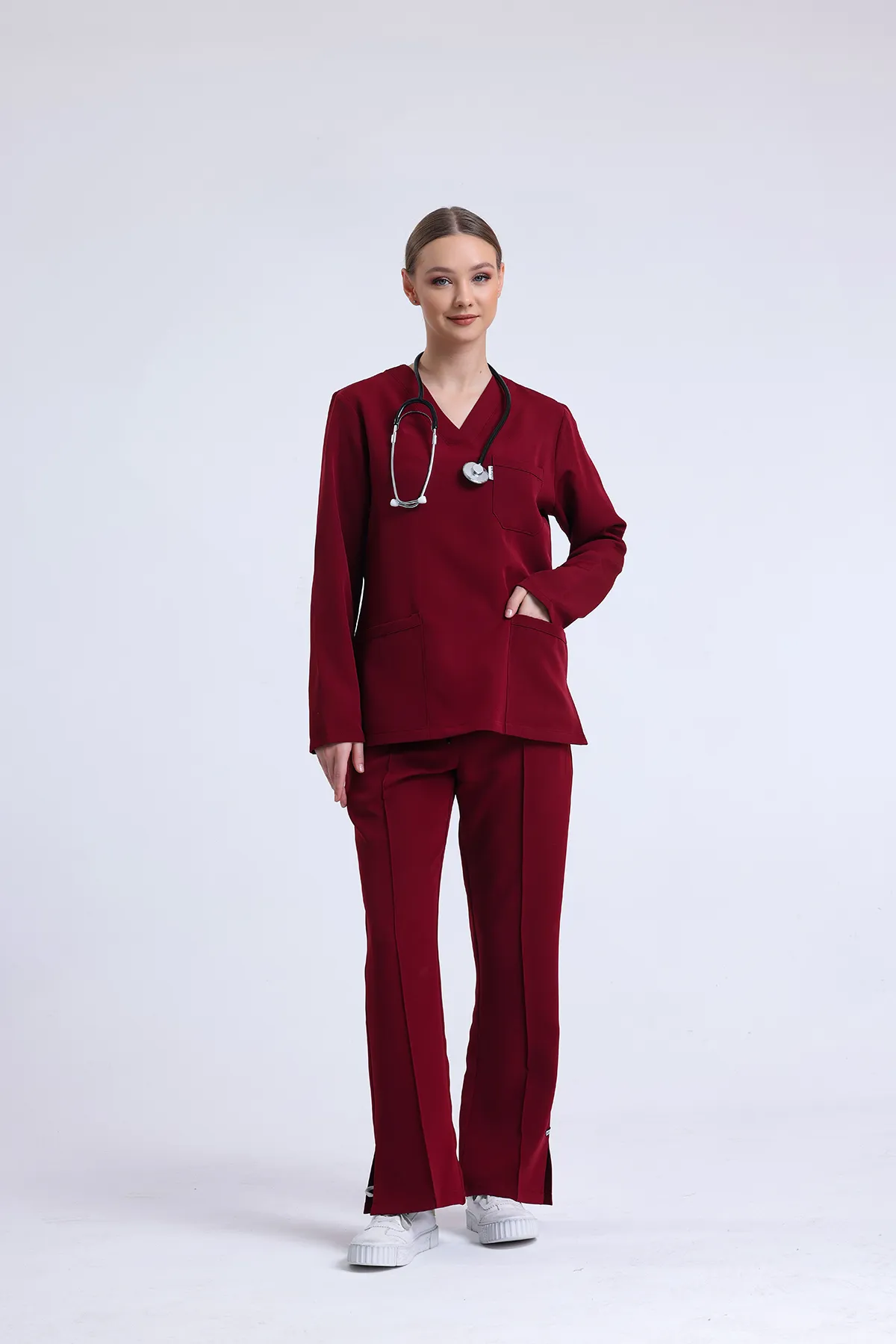
The program can cover work shirts, pants, jackets, vests, coveralls, high-visibility garments, chef apparel, hotel uniforms, scrubs, and lab coats. Give every product one documented use and one owner. When nobody owns a garment, nobody notices when it stops fitting the job.
How is the total order quantity calculated?
Total demand = participating employees × approved issue quantity, plus a reserve based on documented hiring, wear, and replacement data.
There is no universal number of uniforms per employee. The right issue quantity depends on shift frequency, laundry turnaround, weather, how dirty the work is, and whether garments stay at the workplace overnight.
A practical worksheet keeps three quantities separate:
| Quantity | Purpose |
|---|---|
| Initial issue | Garments assigned to participating employees |
| Operational circulation | Items out of service during laundry or repair |
| Replacement reserve | New hires, size changes, damage, documented wear |
Calculate each garment on its own. An employee may need four shirts but only two pairs of pants and one jacket.
Base the reserve on real workforce and usage data. A flat percentage applied across every size tends to produce the worst of both worlds: shortages in common sizes and dead stock in rare ones.
How does the 100-piece MOQ work?
The minimum is 100 pieces per color-and-style combination. Sizes can be mixed freely within one otherwise identical variant.
A navy work shirt is one variant. The same shirt in gray is a second variant. A jacket and a shirt are separate styles even when they share fabric and logo.
| Order configuration | MOQ result |
|---|---|
| 100 navy shirts in several sizes | Meets MOQ |
| 50 navy and 50 gray shirts | Does not meet MOQ per color |
| 100 navy shirts and 100 navy pants | Meets MOQ for both styles |
| 300 identical jackets split among plants | Meets MOQ |
Several locations can pool demand as long as the product specification stays identical. The finished cartons can then be packed by plant, department, or size.
Watch out for quiet variant creep: different pockets, trims, logos, or protective features may each create a separate production configuration. List them all before requesting a price.
How should employee sizes be collected?
Build the size matrix from an approved measurement chart or a fit trial. Letter sizes are not standardized across suppliers.
A medium from one brand rarely matches a medium from another. Employees should be measured against the actual proposed garment, not their favorite shirt at home.
A fit set earns its cost when the program includes structured jackets, coveralls, or pants with inseam options. Have employees test real movement: reaching, bending, kneeling, sitting, and getting at tools and pockets.
The final production matrix identifies:
- style and size quantities,
- length options where available,
- quantities assigned to each destination.
The manufacturer needs aggregate production quantities, nothing more. Employee-level size records stay in the employer's own controlled system.
What should a workwear sample prove?
The 5-to-7-business-day sample confirms measurements, mobility, fabric, construction, color, logo, labels, and compatibility with the intended care process.
Evaluate the sample against the written product specification. "Make it looser" is not feedback a factory can act on; a defined measurement change at a named point is.
Let employees test the actual tasks the garment has to support. A warehouse jacket needs comfortable reaching and scanner access. A maintenance pant needs tool pockets in a place that actually works. A chef coat should be checked for closure, sleeve, and kitchen movement.
Check logo width, position, color, and decoration method on the physical garment. A flat digital mockup cannot show embroidery puckering, print stiffness, or a logo colliding with a seam.
Once approved, the physical sample and the signed specification become the references for production and every future reorder.
Is ordinary workwear the same as PPE?
No. Standard uniforms identify employees. PPE must provide verified protection against a hazard the employer has identified.
Personal protective equipment cannot be chosen by appearance. OSHA's PPE guidance requires employers to assess workplace hazards and select equipment that protects against the risks they find.
A branded shirt does not protect anyone from heat, flame, chemicals, electrical hazards, or moving traffic. If the program needs high-visibility or flame-resistant garments, define the relevant performance requirements before product development starts.
Logo decoration must not cover reflective material, safety labels, or protective features. Embroidery and other modifications can also affect a certified construction. The company logo workwear guide explains how decoration should be reviewed on protective apparel.
Which fabric and certification details matter?
Specify fiber content, weight, color, care process, and any tested property the employee's actual work requires.
Cotton, polyester, blends, and specialty fibers behave differently in moisture handling, drying, dimensional stability, and care. No single composition suits every workplace.
OEKO-TEX STANDARD 100 covers harmful-substance testing for defined textiles and components. A certificate for the base fabric does not automatically extend to a finished garment once trims, embroidery, printing, or coating are added.
ISO 9001:2015 addresses quality management processes. GOTS covers certified organic natural fibers and processing criteria. REACH is the European Union chemicals framework. None of these establishes occupational protection or guarantees a number of wash cycles.
Every claim about durability, dimensional stability, colorfastness, or protection should come with its own test method and acceptance criterion. If a claim has no test behind it, treat it as marketing.
What labeling is required for company uniforms?
The company logo does not replace fiber, origin, responsible-party, size, or care information on covered textile apparel.
The Federal Trade Commission's apparel guidance explains that most textile and wool products need fiber content, country of origin, and responsible-business identification. Covered apparel also needs care information.
Approve legal labels separately from decorative branding. Garments manufactured in Istanbul must carry accurate country-of-origin information and cannot be labeled "Made in USA."
Uniforms may also carry internal item numbers, employee identifiers, or location codes. Keep these operational markings clear of required label information and safety markings.
If individual names go on garments, the company needs a process for spelling approval, privacy, reassignment, and replacement. Sooner or later a named garment will need to go to somebody else.
Should companies buy or rent employee uniforms?
Purchase gives more design control. Rental can bundle garments, laundering, repair, pickup, and replacement into an ongoing service agreement.
With a purchase program, the employer owns the garments and defines custom patterns, colors, logos, and labels. In exchange, it has to organize distribution, laundry, repair, collection, and replacement itself or through separate providers.
A rental model consolidates those recurring services. UniFirst shows how one provider can offer direct-purchase, managed-inventory, national-account, and rental programs; exact services and contract terms vary.
TB Uniform sells workwear from Istanbul and does not provide US rental, laundry, pickup, managed domestic inventory, or employee fulfillment. Compare both models over the same period and include garments, circulation stock, washing, service fees, losses, repairs, and contract exit terms. A rental quote that looks cheap per week can look different over three years.
How should multiple locations receive uniforms?
A multi-site order needs one item structure, one approved revision, and packing instructions that identify destination, department, style, size, and quantity.
The company can choose central receiving or direct shipment to several facilities. Central receiving simplifies import and quantity checks but requires internal redistribution. Multiple destinations mean more detailed packing and delivery coordination.
Before shipment, buyer and supplier should agree on:
- delivery term and importer responsibilities,
- carton labels and packing lists,
- receiving contacts and address rules.
Production takes place in Istanbul and exports ship to North America. There is no US factory, office, warehouse, local stock, same-day replenishment, or domestic return address.
After sample and order approval, production and delivery usually take 4 to 6 weeks. Urgent replacements have to come from employer-held reserve stock or a verified domestic inventory supplier, not from the factory.
How are reorders kept consistent?
Every reorder should reference the original style number, revision, fabric, color standard, measurements, logo file, labels, and physical sample.
"Same as last time" is not a manufacturing instruction. The company may have ordered several similar jackets, or revised its logo between purchases, and nobody remembers which version "last time" was.
A reorder request states current quantities by size and flags every proposed change. Check certificate validity and material availability again. Fabric lots can show minor shade variation, so coordinate items that are worn together when color matching matters.
Reorders remain subject to 100 pieces per color and style. Scheduled order windows let the employer combine new-hire, size-change, and replacement demand from multiple sites into orders that clear the minimum.
How should companies compare bulk uniform suppliers?
A defensible comparison reviews nine areas: product fit, sample, MOQ, capacity, branding, safety, quality, delivery, and reorder support.
Treat bulk work uniforms for employees as a continuing workforce program, not a one-time apparel purchase. A low unit price may quietly exclude sampling, decoration, labeling, freight, import charges, distribution, laundry, and replacement inventory.
Before approving production, the company should hold a signed garment specification, a physical sample, a size matrix, logo approval, variant quantities, safety requirements, and written delivery terms.
Companies building a wider shortlist can also use the wholesale workwear guide and the company logo workwear guide. To see a garment before committing, you can request a sample and quote from TB Uniform.
Frequently Asked Questions
What is the MOQ for bulk employee uniforms?
The minimum order is 100 pieces per color and style. Multiple employee sizes can be combined inside one otherwise identical variant. Different colors and garment styles count separately. Companies can consolidate identical demand from multiple facilities and have the finished packaging divided by location.
How many uniforms should each employee receive?
There is no universal issue quantity. Consider shift frequency, laundry turnaround, soil level, seasonal use, repair time, and whether garments stay on site. Total demand should include the initial employee issue, operational circulation, and a reserve based on documented hiring and replacement data.
How long does a bulk work uniform order take?
A physical sample normally takes 5 to 7 business days once the specification and artwork are complete. After sample and order approval, production and delivery typically require 4 to 6 weeks. Material availability, quantity, customization, freight, customs, and receiving arrangements affect the confirmed schedule.
Can several company locations share one order?
Yes. Multiple facilities can combine demand when style, color, fabric, construction, and branding remain identical. The garments can then be packed by destination, department, or size. Different colors, styles, logos, or safety configurations are listed separately and reviewed against the minimum quantity.
Are standard company uniforms considered PPE?
No. Ordinary uniforms identify employees and support job tasks. PPE must provide verified protection against hazards identified through the employer's assessment. A logo, reflective accent, fluid-resistant description, or flame-related marketing term does not by itself prove compliance with an occupational safety standard.
Is immediate US replacement inventory available?
No. The uniforms are manufactured in Istanbul and exported to North America. There is no US factory, office, warehouse, local inventory, same-day service, or domestic return location. Employers should hold replacement stock based on actual use or add a verified domestic supplier for urgent needs.
Alt Texts
- Employee work uniform program organized by job role and garment type
- Workers using a fit set to confirm jacket, pant, and coverall sizes
- Logo workwear packed by department and company location
- Bulk employee uniforms prepared for export from Istanbul to North America