How Do You Plan a Bulk Hi-Vis Vest Order for Construction?
Start with the site's struck-by hazard assessment, then work forward: applicable traffic rules, ANSI/ISEA 107 garment type and performance class, size range, labeling, and the documents that prove all of it. In temporary traffic-control zones, the MUTCD calls for Performance Class 2 or 3 apparel. A fluorescent color by itself proves nothing about whether a finished vest meets the standard.
When is high-visibility apparel required?
OSHA names at least 2 construction situations that explicitly involve high-visibility garments: flagging, and work near public traffic around excavations.
Beyond those, OSHA has stated that highway and road construction workers exposed to public or construction traffic generally need high-visibility apparel under the General Duty Clause. The agency's position on struck-by hazards is laid out in its interpretation letter on highway work-zone garments.
Before ordering anything, the employer should document the actual exposure:
- Public and construction vehicle traffic
- Vehicle speeds
- Day, night, and low-light work
- Complex or changing visual backgrounds
- Worker distance from traffic
- Equipment blind spots
- Flagger duties
- Weather conditions
- Tasks that pull attention away from traffic
- Site-specific and state requirements
One caution: a vest improves conspicuity. It does not replace traffic-control plans, barriers, spotters, lighting, equipment controls, or training. Those measures are selected for the site, not substituted by apparel.
Which ANSI/ISEA 107 type and class should be ordered?
ANSI/ISEA 107 defines 3 garment types and 3 performance classes; the employer must match the combination to actual exposure, not pick the highest number by default.
ANSI/ISEA 107-2020 sorts garments by expected use setting: Type O for off-road work, Type R for roadway and temporary traffic-control exposure, Type P for public-safety activities. Performance Class 1, 2, or 3 then reflects visible-material quantities and design attributes.
For roadway work, the FHWA's MUTCD Section 6C.05 requires workers within a right-of-way and temporary traffic-control zone to wear apparel meeting Performance Class 2 or 3 of ANSI/ISEA 107-2015 or an equivalent revision. The designated employer representative selects the appropriate class.
Official references worth keeping on file:
- FHWA MUTCD 11th Edition, Part 6
- FHWA MUTCD edition and effective-date information
- ANSI/ISEA 107-2020 standard description
FHWA lists the 11th Edition with Revision 1 as effective March 5, 2026. Federal, state, local, contract, and site-specific requirements should still be confirmed at purchase time.
Can a sleeveless vest meet every performance class?
Verify 3 finished-product facts before committing: garment type, performance class, and the required visible-material area in the size actually offered.
"Class 3 vest" in a product listing is a marketing phrase, not a guarantee. Minimum material areas and placement rules apply to the finished garment, and smaller sizes often need specific designs to hit the numbers.
Spell out on the purchase order:
- Standard and edition
- Garment type
- Performance class
- Finished product model
- Available size range
- Background material
- Retroreflective material
- Test evidence
- Label content
- Declaration or conformity documentation
If a sleeveless construction cannot deliver the required material area or body definition, the answer may be a shirt, jacket, coverall, or garment ensemble instead. Have the responsible safety professional approve the model before the order goes out.
Which colors and reflective layouts are acceptable?
MUTCD Section 6C.05 permits 2 fluorescent background colors, orange-red and yellow-green (alone or combined), plus specified retroreflective colors.
Retroreflective material may use specified orange, yellow, white, silver, yellow-green, or fluorescent versions of those colors, as defined in the ANSI standard.
A bright brand color is not automatically a compliant background material. Confirm:
- Chromaticity and luminance requirements
- Retroreflective performance
- Required material areas
- Placement and continuity
- Visibility from the relevant directions
- Performance after specified exposure and care cycles
- Finished-product labeling
Approving a color from a screen image, a visual sample, or a generic color name is not enough. Material test documentation must correspond to the actual production input.
What documentation should the supplier provide?
A complete hi-vis vest file holds at least 10 distinct records across materials, testing, design, labels, sizing, production, and traceability.
Request from the supplier:
- Exact standard and edition
- Type and performance class
- Finished garment model
- Background-material test evidence
- Retroreflective-material test evidence
- Design and visible-area calculations
- Required product label
- Size-specific compliance information
- Care instructions
- Material and production traceability
- Quality-control records
- Change-control procedure
ISEA warns buyers that "ANSI Certified" wording can be a red flag when a seller names no actual standard and supplies no label or evidence. Its PPE purchasing guidance recommends verifying testing paperwork instead of trusting an online description.
Names, dates, product models, materials, and manufacturers in the documents should match the goods that arrive.
How should construction vest sizing be evaluated?
OSHA 1926.95 requires construction PPE to fit properly, so check at least 2 dimensions over the clothing workers actually wear.
The vest needs appropriate coverage without excess loose material, closure strain, or interference with other equipment. Test it over both warm-weather and cold-weather work layers.
Review during fitting:
- Chest circumference
- Garment length
- Armhole clearance
- Front closure
- Compatibility with harnesses
- Tool-belt interaction
- Pocket position
- Range of movement
- Small and extended sizes
- Continuity of visibility material when worn
The OSHA construction PPE criteria require safe design and construction plus proper fit for each affected employee.
One oversized shared vest is not a size program. Base quantities on employee measurements, work layers, visitor needs, replacement stock, and site turnover.
Can logos or pockets be added to a compliant vest?
Every customization needs 4 checks: visible-area impact, material compatibility, label accuracy, and inclusion in the verified finished design.
A large printed logo, an opaque badge, an added pocket, a contrast panel, or a rearranged reflective layout can reduce compliant material area or turn the garment into something other than the approved model.
TB Uniform runs printing and embroidery in-house for general uniforms. That capability alone does not establish that a logo or pocket modification preserves ANSI/ISEA 107 compliance. Decoration has to be evaluated as part of the finished safety garment. Document logo placement by dimensions and fixed reference points. Where branding conflicts with the required high-visibility design, safety wins.
Multi-garment sourcing across a whole crew is a separate exercise, covered in the industrial workwear supplier guide. Flame hazards need their own analysis in the FR clothing guide for oil and gas. Ordinary polyester hi-vis material should never be assumed suitable for flash-fire exposure.
How should care and replacement be managed?
A vest program needs at least 5 lifecycle controls: approved cleaning, inspection, storage, replacement criteria, and issue records.
Dirt, fading, abrasion, damaged retroreflective material, unauthorized repairs, and repeated laundering all reduce conspicuity over time. Follow the garment manufacturer's instructions and any limits stated in the compliance documentation.
Inspect for:
- Background-color degradation
- Cracked or missing reflective material
- Tears and open seams
- Broken closures
- Contamination
- Obscured labels
- Unapproved decoration
- Incorrect size or fit
Define who inspects garments, how often, how defects get recorded, and when a vest comes out of service. Do not invent a fixed wash-count limit unless the product's documentation supports one.
How should samples and bulk production be approved?
A hi-vis project takes 2 approvals: a fit and workmanship review, then compliance verification for the exact finished model.
A general garment sample confirms dimensions, closures, pockets, logo position, workmanship, and compatibility with other equipment. It does not, on its own, prove conformity with ANSI/ISEA 107.
Before releasing bulk production, also verify:
- Materials against documented sources
- Reflective layout
- Size-specific visible areas
- Correct label
- Test and conformity records
- Production-lot traceability
- Packing by size
- Final inspection plan
TB Uniform was founded in 2004 and manufactures in Istanbul, Turkey. The standard custom minimum is 100 pieces per color and model; a sample generally takes 5–7 business days, and production plus delivery generally runs 4–6 weeks after approval.
Those are the standard figures for general uniform work. They do not establish the schedule, MOQ, or feasibility of an ANSI/ISEA 107 project. Testing, approved materials, design review, labels, and outside services may add time or change the commercial structure. TB Uniform's current ANSI/ISEA 107 compliance scope, tested vest models, material reports, and project-specific terms require written confirmation before any compliance claim is relied on.
For a technical evaluation, send the project details: site hazard assessment, required standard and edition, garment type and class, sizes, quantities, design, documentation list, branding, destination, and delivery requirement.
What do construction buyers ask about hi-vis vests?
Does every construction worker need the same vest class?
No. The employer should weigh traffic exposure, work setting, speed, lighting, background complexity, task load, and applicable requirements. MUTCD Section 6C.05 specifies Class 2 or 3 apparel for covered workers in temporary traffic-control zones, with the class selected by the responsible employer representative.
Is any fluorescent yellow vest ANSI/ISEA 107 compliant?
No. Visual color alone proves nothing. The finished garment must meet the applicable requirements for background material, retroreflective material, visible areas, layout, performance, sizing, and labeling. Verify the exact standard edition, type, class, model, reports, and production documentation.
What information should appear on a compliant vest label?
The label should carry the information required by the applicable ANSI/ISEA 107 edition and match the finished garment's type, performance class, manufacturer, model, size, and care information. Compare label artwork against the standard and supporting documents rather than accepting vague "ANSI Certified" wording.
Can a company logo be printed on a safety vest?
Only if its material, dimensions, and placement leave the required visible areas, design, performance, and labeling intact. The customized finished model should be reviewed and documented. Approval of an undecorated vest does not automatically extend to a large printed or embroidered version.
What is TB Uniform's normal minimum order and lead time?
The standard custom minimum is 100 pieces per color and model. Sampling normally takes 5–7 business days, followed by roughly 4–6 weeks for production and delivery after approval. A high-visibility compliance project may require different timing, testing, documentation, or MOQ.
Does TB Uniform currently offer ANSI/ISEA 107-compliant vests?
That status is not established by the available company information. Exact models, type and class designations, material reports, labels, conformity documents, size-specific designs, and production controls must be verified in writing before making a compliance or supplier claim.
Recommended image alt texts
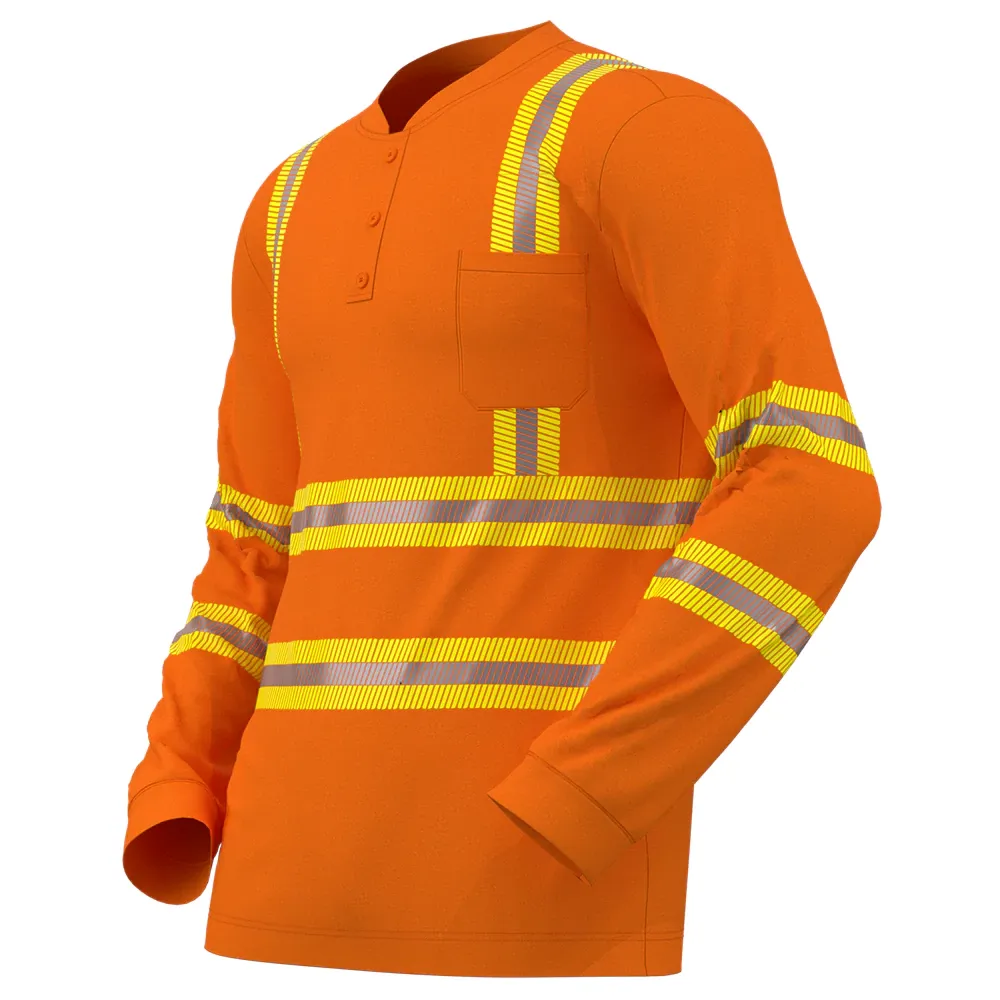
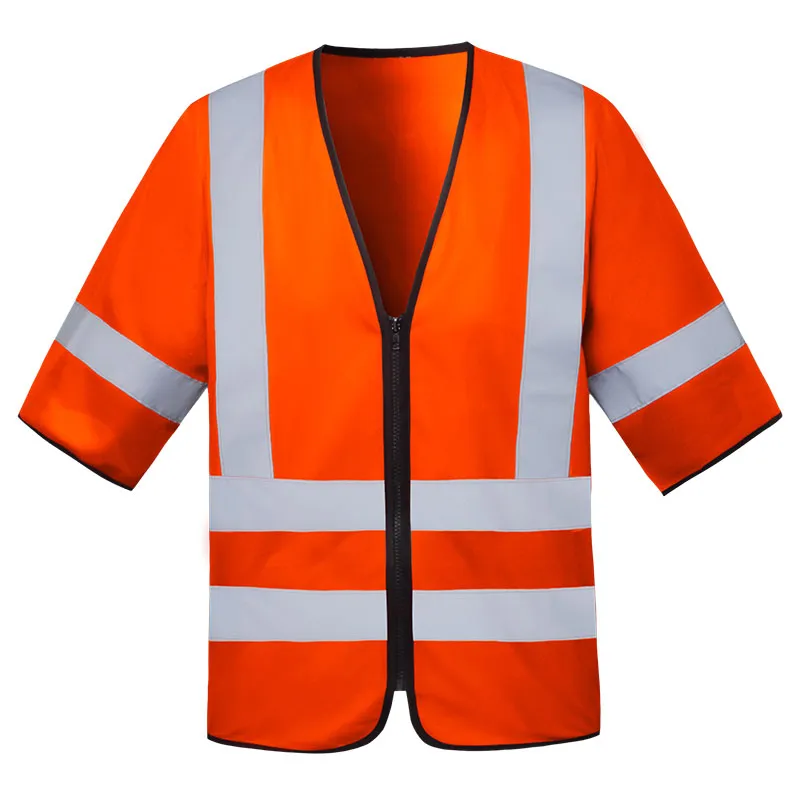
- Construction hi-vis vest procurement review showing fluorescent background material, retroreflective layout, label, closure, sizing, and documentation checkpoints.
- Flagger in a Class 2 hi-vis vest working in a temporary traffic-control zone on a US highway project.
- Purchase-order checklist for ANSI/ISEA 107 garment type, performance class, and finished-model documentation.