Uniform Supplier for Texas Clinics
A clinic in Houston, Dallas or anywhere else in Texas can order custom scrubs and medical uniforms from an Istanbul manufacturer, but the arrangement works differently than buying from a local vendor. There is no Texas office, warehouse or same-day stock behind it. Every order runs through a fixed sequence of sample and production steps, with a minimum of 100 pieces per color and model. Samples typically ship in 5 to 7 business days, and production and delivery add another 4 to 6 weeks after approval. Clinics that plan around that timeline, rather than expecting local-supplier speed, tend to get the smoothest results.
What uniforms can a Texas clinic order?
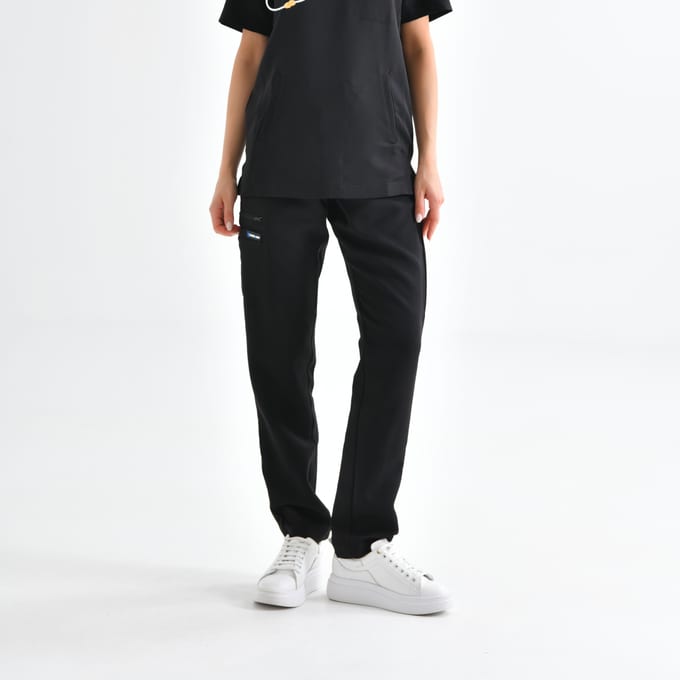
A clinic can standardize three core garment groups: scrub tops, scrub pants and medical coats, with role-specific colors or branding for each.
Primary-care practices, dental offices, specialty centers, urgent-care clinics and outpatient groups can all specify garments for clinical and administrative staff. Typical development covers:
- Custom scrub tops and pants
- Doctor or laboratory coats
- Uniforms for reception and support staff
Pattern, fabric, color, pockets and closures can all be adjusted to a clinic's approved specification, and embroidery or printing is done in-house. That means a program can carry a clinic logo, an employee's role or a department name without going through a third party.
One distinction matters here: standard scrubs are workplace uniforms, not personal protective equipment. If a role involves exposure to blood, chemicals or another hazard, the clinic still needs to select dedicated PPE through its own hazard assessment. Scrubs don't substitute for that.
How does one supplier serve Houston, Dallas and the rest of Texas?
A single specification can cover clinics across at least five Texas markets: Houston, Dallas-Fort Worth, Austin, San Antonio and El Paso.
TB Uniform manufactures at its own facility in Istanbul and exports orders to North America. There's no Texas factory, showroom, sales office, warehouse or domestic return center attached to that model. Everything ships internationally and clears customs before it reaches a Texas address.
For groups with more than one site, that means naming a single receiving location or submitting a documented packing plan up front. When those instructions are approved before production starts, cartons can be organized by clinic, department, model or size rather than arriving as one undifferentiated shipment.
In practice, a statewide group spanning Houston to Dallas-Fort Worth can run on one garment model while still assigning different colors or embroidery to different roles. Independent practices in Austin, San Antonio, El Paso or the Rio Grande Valley follow the same process; it just depends on reaching the per-color-model minimum. Delivery routing, importer responsibility, customs clearance and domestic distribution should all be spelled out in the quotation before an order is placed.
What's the minimum order for Texas clinic scrubs?
The minimum is 100 pieces per color and model; approved sizes can be mixed freely within that production lot.
Here's how the count actually works: a navy V-neck top and a navy scrub pant are two separate models, so each one needs its own 100-piece minimum. Add ceil blue in both garments and the program now has four color-model combinations, a 400-piece floor before a single unit ships.
That's why consolidating employee demand before committing to multiple colors matters. Smaller practices often do better starting with one shared model and color, then distinguishing roles through embroidery rather than a second colorway. The wholesale scrub MOQ guide walks through building the order matrix. Tops and pants should always be counted separately in that matrix, even when staff receive them as a set.
How should a Texas clinic choose sizes and colors?
Approve one finished-garment size chart and run a physical fit test before locking in the final size breakdown.
Don't carry over sizes from an existing supplier just because the labels match. A medium in one pattern can differ meaningfully from a medium in another: chest, hip, rise and inseam all vary by block.
The safer path: measure staff under one consistent method, provide samples cut from the exact approved pattern, and record top and pant selections separately. Petite, tall, extended and adaptive needs should be part of that first fit review, not an afterthought added later. The bulk scrub sizing guide covers the measurement process in more detail.
Color choices deserve the same care. Department colors should stay easy to identify and easy to reorder, but color alone shouldn't be the only identifier. Written role names or badges add a second cue that survives faded fabric or a new hire who hasn't learned the color system yet. A color-coded scrub policy guide shows how to tie each shade to one defined employee group without the system sprawling over time.
Which US and Texas requirements should clinics review?
Texas private-sector clinics generally fall under federal OSHA jurisdiction, and ordinary uniforms need to stay clearly separated from task-specific PPE requirements.
Texas doesn't run its own OSHA-approved State Plan, so federal OSHA covers most private-sector workers in the state. It's the clinic's safety personnel, not the uniform supplier, who need to assess occupational hazards and determine when gloves, gowns, face protection or other PPE is actually required.
For infection-prevention guidance specific to the state, the Texas DSHS Healthcare Safety Unit is the relevant resource for Texas healthcare facilities. A uniform program should align with a clinic's existing infection-control and laundry policies, but it shouldn't claim that ordinary scrubs prevent healthcare-associated infections, because they don't function as a control measure on their own.
Imported garments carry their own labeling obligations, too. The FTC's apparel labeling guidance covers fiber content, country of origin, responsible-business identification and care instructions, all worth checking against whatever labels ship with an overseas order.
One more area clinics often overlook: dress policies need a built-in accommodation process. The EEOC identifies dress and grooming exceptions as a possible religious accommodation under Title VII, unless granting them would create undue hardship for the clinic.
How does the Texas clinic ordering process work?
A Texas clinic order moves through three approval stages: written specification, physical sample, and a confirmed bulk production file.
The process starts with the clinic submitting quantities by model, color and size, along with a garment reference, fabric requirements, a logo file, label text and the Texas delivery destination. Monthly production capacity reaches up to 50,000 pieces, depending on the product group, which is enough headroom for most clinic-scale programs.
From there, a custom sample is prepared, normally within 5 to 7 business days of technical confirmation. This is the stage to check fabric, movement, opacity, measurements, pockets, embroidery and labels closely. Revisions here are far cheaper than revisions after bulk cutting.
Once the sample and the final size matrix are both approved, along with the commercial terms, production and delivery generally take 4 to 6 weeks. Customs clearance and domestic transit arrangements still need to be confirmed for the actual order before it ships.
Clinics planning a system-wide rollout rather than a single-location order may find the hospital uniform program guide useful for the policy, fitting, issuance and replacement side of the process. From there, the next step is simply to request a sample and quote.
Frequently Asked Questions
Does the supplier have a warehouse or showroom in Texas?
No. Manufacturing happens in Istanbul, and orders are exported to North America from there. There's no Texas factory, office, showroom, warehouse, local stock or same-day delivery operation. Texas buyers should build sampling, production, international transport, customs clearance and domestic distribution into their target delivery date from the start.
What is the minimum scrub order for a Texas clinic?
The minimum is 100 pieces per color and model. A top and a pant count as separate models even when they're worn together as a set, though sizes can normally be mixed within each qualifying lot. Adding another color or a substantially different fit block creates another color-model combination, which typically needs its own separate minimum.
Can a multi-location Texas clinic group run on one uniform program?
Yes. A group can approve one core garment specification and build a documented quantity and packing matrix for each site. Houston, Dallas-Fort Worth, Austin, San Antonio and other locations can share the same fabric and branding. Department colors, embroidery, size distributions and receiving instructions should all be confirmed before the bulk lot goes into production.
Can clinic logos and employee roles be embroidered?
Yes. Embroidery and printing are done in-house once artwork, size, color and placement are approved. The clinic needs to supply a usable logo file and clarify whether every garment gets the same design. Role names or location identifiers should be listed separately so decoration and packing quantities stay traceable through the whole order.
How long does a custom clinic-uniform order take?
A sample normally takes 5 to 7 business days once design, fabric, color, measurements and artwork are confirmed. Production and delivery generally add another 4 to 6 weeks after order approval. The full schedule should also account for sample transport, possible revisions, customs clearance and final delivery within Texas.
Are regular medical scrubs considered PPE in Texas clinics?
No. Ordinary scrubs are workplace uniforms, not protective equipment. A clinic still needs to assess employee exposure and provide suitable PPE for tasks involving blood, body fluids, chemicals or other hazards. Antimicrobial finishes, denser fabric or a more polished appearance don't turn a standard scrub set into compliant protective clothing.
Alt text recommendations
- Custom navy scrubs prepared for a multi-location clinic group in Texas
- Texas clinic staff reviewing embroidered scrub samples and size charts
- Medical uniform order packed by clinic location, department and employee size