How should a company plan a wholesale workwear order?
A wholesale workwear order holds together when four things are written down before a supplier quote is requested: the garment style, the risk tied to how it will be used, the size breakdown, and the logo requirement. Skip any of the four and the quote usually changes once samples arrive. At TB Uniform, the minimum order is 100 units per color and style, sampling runs 5 to 7 business days, and production plus delivery takes 4 to 6 weeks from order confirmation.
What belongs in the scope of a wholesale order?
Garment choice follows the job and the environment, not a job title on paper. A vest worn inside a warehouse and a hi-vis jacket worn on an open site don't belong in the same technical spec. They answer different questions about fabric, layering, and expected service life.
TB Uniform manufactures in Istanbul, producing medical uniforms and workwear, and can develop custom styles for work garments, coveralls, jackets, vests, and hi-vis clothing. Build the order sheet line by line: garment type, season, color, and quantity for each role, keyed to the task rather than the title.
Companies with several locations can split delivery quantities by site. That's a packing instruction, not evidence of a second facility: production runs from a single site in Istanbul, and no other plant, warehouse, or branch should be assumed. Before the first supplier call, the evaluation criteria in choosing a corporate workwear supplier help pin down scope more precisely.
Why is MOQ calculated by color and style, not as one lump sum?
TB Uniform's minimum order is 100 units per color and style. A single total quantity doesn't split freely across different fabrics, colors, and patterns; each combination has to clear its own 100-unit floor.
Ordering 100 navy and 100 gray units of the same pants style creates two separate color line items. If a summer-weight and winter-weight version of the same garment use different fabric or pattern, treat them as separate styles too. The technical difference decides this, not the season's name.
Sizes can be freely distributed inside each 100-unit line. Roll up employee measurements against an approved size chart and flag any in-between sizing during the sample stage, not after production starts. How workwear MOQ is broken down covers mixed-order math in more detail.
What buying risk does a sample actually remove?
Once specs are locked, sampling takes 5 to 7 business days. A sample isn't a sign-off on appearance; its real job is confirming fit and function on the finished garment.
On pants, check the waistband construction, inseam length, pocket access, and range of motion. On coveralls or jackets, check zippers, closures, pocket placement, and how layering works underneath. If a logo is involved, embroidery density or the printed surface needs to be seen on the physical piece. A digital mockup won't show either one.
It's worth putting the sample through a short wear test during the actual task it's built for. Turn the results into a written record. "A bit tight" isn't something a factory can act on; a specific measurement change at a specific point is. Bulk production should only be released once that record is signed off.
How should fabric and documentation be chosen?
Fabric selection depends on friction, movement, ambient temperature, and the care routine the garment will go through. Cotton wovens and polyester blends don't behave the same way around moisture, drying time, or shape retention, so the decision shouldn't rest on fiber name alone.
Weight, shrinkage, colorfastness, and abrasion results belong on a technical spec sheet or a test report, not in marketing copy. "Heavy-duty fabric" on its own isn't a purchasing criterion.
OEKO-TEX STANDARD 100 is a label that screens textile products for harmful substances. ISO 9001 sets requirements for an organization's quality management system. GOTS covers processing and supply chain standards for organic textiles. REACH, administered by the European Commission, is the EU framework for registering, evaluating, authorizing, and restricting chemical substances.
None of these documents automatically proves a vest's hi-vis class or a coverall's flame resistance on its own. If protective performance is required, verify the product-specific standard and compliance documentation separately, and route the decision through your own safety and compliance contact.
Print or embroidery for the logo?
Embroidery builds the logo out of stitched thread; printing transfers the artwork onto the fabric surface with the appropriate method. The right choice depends on how much fine line detail the logo has, the fabric it's going on, where it sits on the garment, and how the piece will be cared for.
TB Uniform runs both printing and embroidery in-house. Before a bulk run starts, the logo file's vector format, target size, color, and placement on the garment all need sign-off.
Embroidery tends to hold up well on heavier outerwear. On very thin fabric, a dense stitch area can distort how the garment drapes. Large or highly detailed graphics are usually better suited to print. Whichever method is chosen, don't approve mass production without seeing it on a physical sample first. Logo print vs. embroidery compares the two methods against specific use cases.
How is the production and delivery timeline built?
Production and delivery run 4 to 6 weeks from order confirmation. That clock starts when the style and order details are confirmed in writing, not on the date of a verbal call.
The order file needs the product code, color, size counts, and logo application spelled out. If custom packaging or a per-branch split is needed, put it in writing before production starts; anything added afterward can push the delivery date back.
Monthly production capacity runs up to 50,000 units, depending on the product group. That figure doesn't mean every order clears on the same schedule; the exact project timeline is set against the specific product group and the approved plan. For samples and a quote, reach out to TB Uniform directly.
Frequently Asked Questions
What's the minimum order for wholesale workwear?
The minimum order is 100 units per color and style. Different colors of the same pants style count as separate color lines. Sizes can be freely distributed within that quantity against an approved size chart. Summer and winter versions can count as separate styles if the fabric or pattern changes.
How long does a workwear sample take?
Once style, fabric, color, and logo details are finalized, sampling takes 5 to 7 business days. The sample gets checked for measurements, pocket placement, closures, and logo application. Fit-test findings should be logged as specific measurements, and bulk production should only start after the final sample is approved in writing.
How long do production and delivery take?
Production and delivery run 4 to 6 weeks from order confirmation, the date the style, quantity, size breakdown, color, and logo details are all locked in. A sample revision or a late addition can push the start of production back.
Can a company get fully custom workwear?
Yes. TB Uniform develops custom patterns, custom colors, and organization-specific styles, with logos applied by print or embroidery. Custom production is still subject to the 100-unit minimum per color and style, and color reference, size chart, logo dimensions, and placement all need sign-off on a sample before bulk production begins.
Is all workwear automatically PPE?
No. General workwear can be designed purely for corporate appearance or everyday use, while protective clothing needs verified performance against a specific workplace hazard. An OEKO-TEX or ISO 9001 certificate alone doesn't prove flame, chemical, or hi-vis compliance, so confirm the product standard with your own safety officer.
Alt Texts
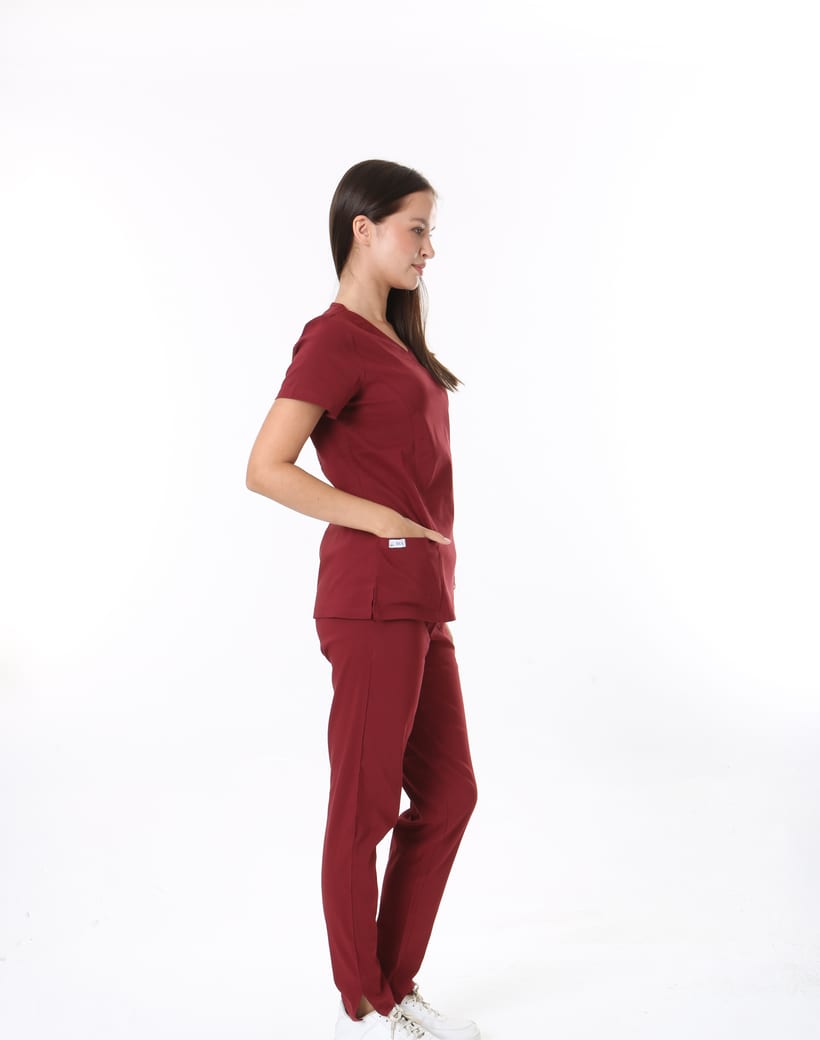
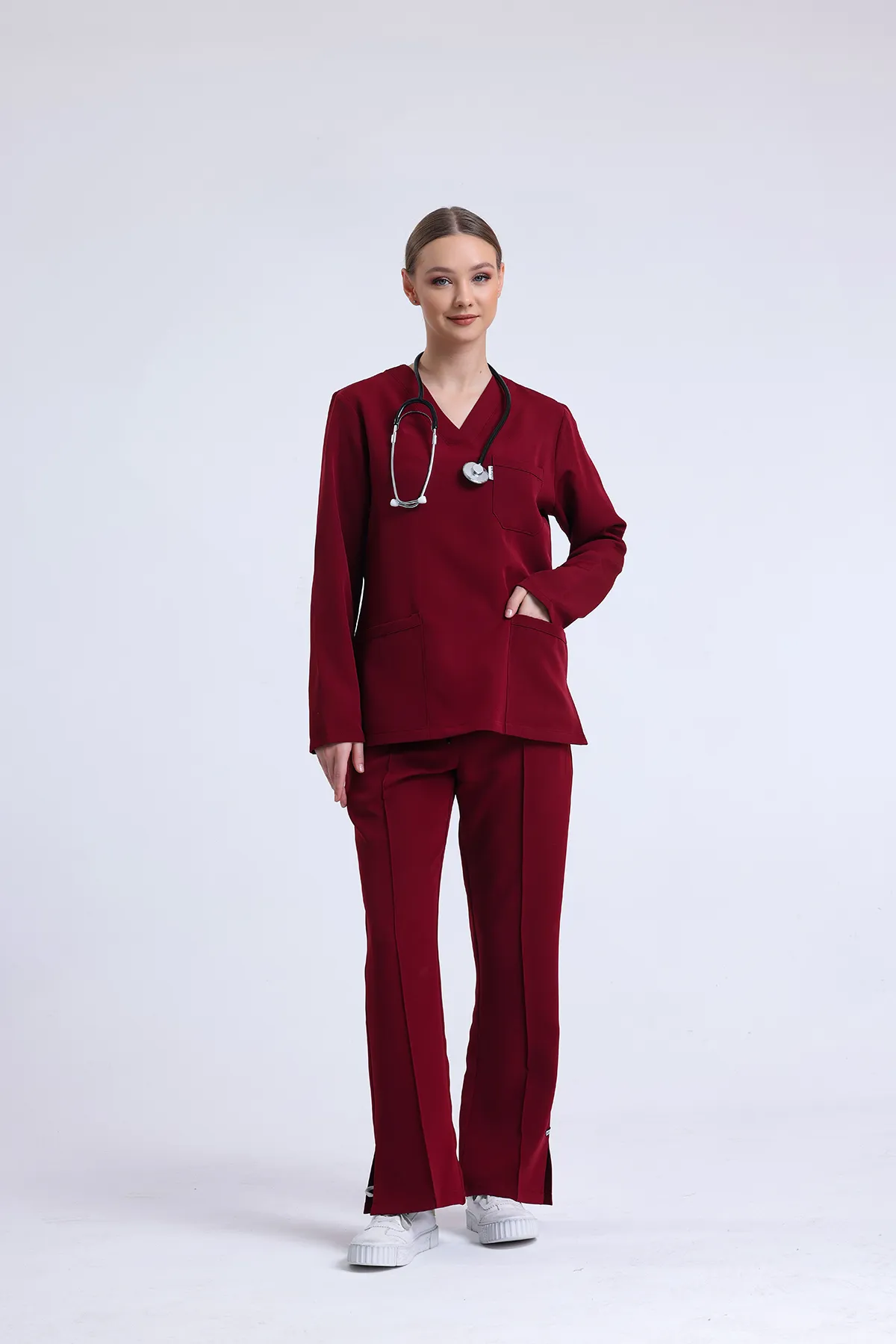
- Wholesale workwear collection shown across multiple styles and colors
- Pocket and logo placement being checked on a work pants sample
- Corporate workwear production chart sorted by size run