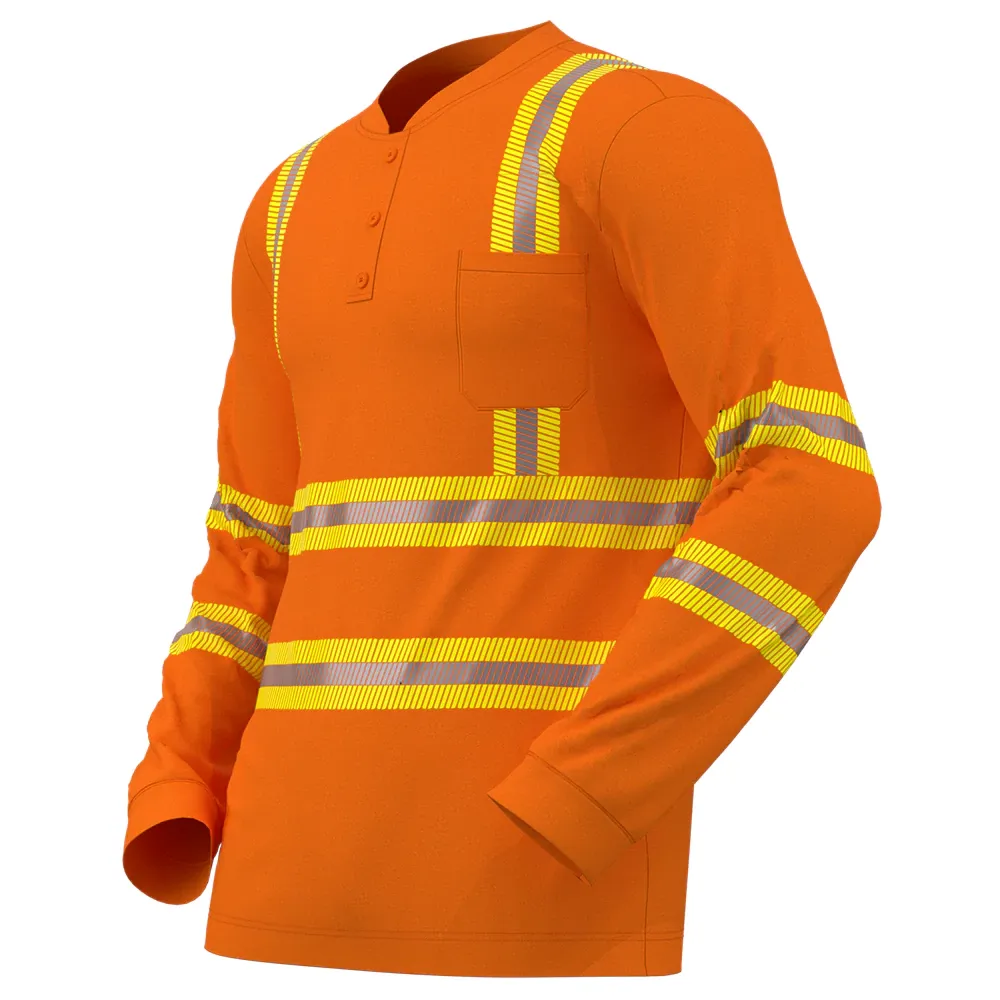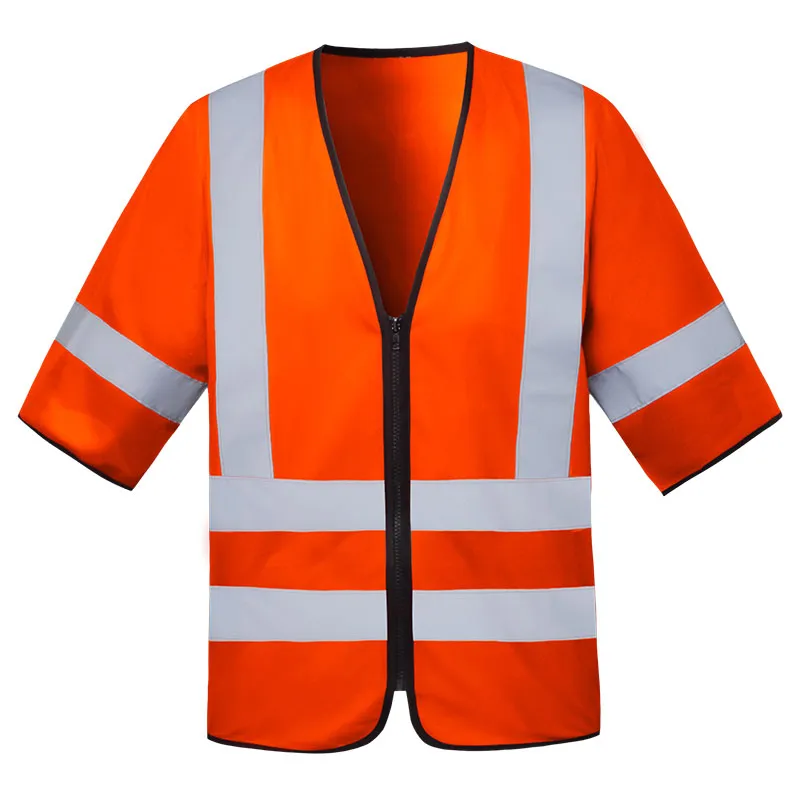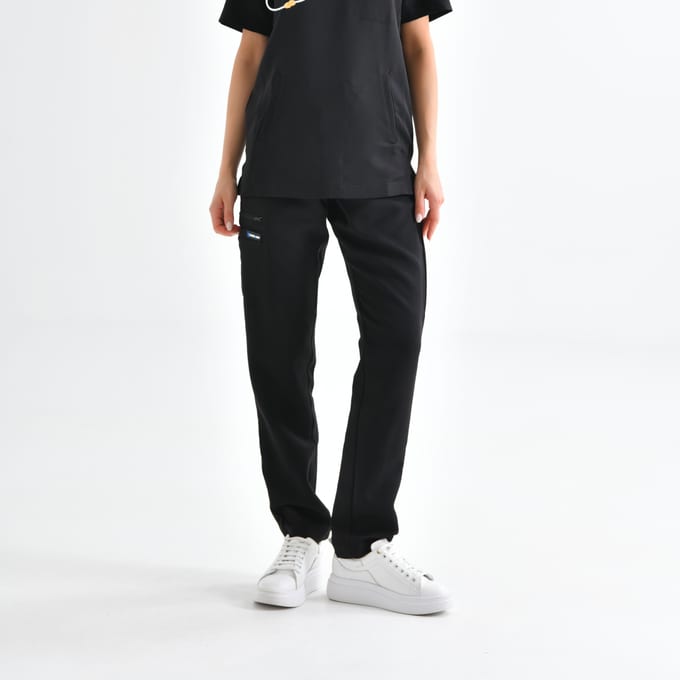
Workwear or Protective Clothing? Why the Distinction Matters
Buyers sourcing for healthcare, hospitality, or industrial teams in Germany and Austria often treat "uniform," "workwear," and "protective clothing" as interchangeable labels. They aren't. Uniform and workwear identify staff and support the job; they don't carry a tested protective function on their own. Protective clothing exists to guard against at least one specifically named hazard and can qualify as personal protective equipment (PPE) under EU Regulation 2016/425. Once protective clothing is required, the employer carries the selection, the cost, the training, the cleaning, the storage, the repair, and the replacement, all matched to a documented risk assessment.
What counts as a uniform?
A uniform identifies the facility, the role, or the department without automatically carrying a tested protective effect against a specific hazard.
Color, cut, logo, or a name badge give a workforce a consistent look and make it easy for residents, patients, customers, or visitors to identify staff. Typical examples:
- a scrub top carrying a clinic logo
- pull-on pants in a department color
- a polo shirt for reception
- a chef coat branded to a restaurant
- a service shirt for hotel staff
- a company jacket for field staff
- a smock used purely to mark a role
An internal dress code can make a uniform mandatory. Who pays for it, who cleans it, and who replaces it is usually decided by the employment contract, a collective bargaining agreement, a works agreement, an internal policy, or applicable law. There's no single rule that covers ordinary uniforms across the board.
What counts as workwear?
Workwear supports the job or protects personal clothing, but it doesn't automatically carry the PPE status of protective clothing.
It's typically more durable, easier to care for, or better suited to the task than personal clothing, with pockets, cut, and fabric chosen around the actual work.
| Feature | Workwear |
|---|---|
| Purpose | Support the task |
| Protects personal clothing | Possible |
| Company branding | Possible |
| Specific protective function | Not required |
| PPE compliance | Not automatic |
| Examples | Work pants, a scrub top, a general-purpose coat |
Germany's BAuA states that ordinary work or occupational clothing typically doesn't carry a specific protective function. In daily practice, the line between "uniform" and "workwear" blurs constantly. What matters isn't the label on the product sheet but the function the garment is actually assigned.
What counts as protective clothing?
Protective clothing has to shield the body from at least one defined risk, and it has to meet the matching requirements, marking, and documentation to prove it.
Protective clothing can be classified as PPE; EU Regulation 2016/425 governs how PPE is placed on the market across the EU. Common protective categories include:
- biological contamination
- chemical exposure
- heat and flame
- electric arc
- molten metal splash
- low visibility in traffic
- electrostatic discharge
- exposure to weather
A single garment can combine several protective functions if the fabric, the design, the trims, and the finished product all satisfy the relevant requirements together. A certified fabric on its own doesn't make the finished garment compliant.
How do the two actually compare?
Uniform and protective clothing split across seven areas: purpose, hazard link, PPE status, standards evidence, cost, cleaning, and training.
| Criterion | Uniform / workwear | Protective clothing |
|---|---|---|
| Main purpose | Recognition, appearance, task support | Protection against a hazard |
| Hazard link | Not required | Specifically required |
| PPE status | Usually no | Yes, depending on the product |
| Standards evidence | Usually not required | Required, matched to the protective function |
| Employer cost | Depends on contract and policy | Employer's responsibility as a rule |
| Cleaning | Internal policy | Controlled per protective requirements |
| Training | Dress code briefing | Protective function and correct use |
| Example | Logo scrub top | Contamination-protection gown |
A scrub top can be both a uniform and workwear at the same time. It only becomes protective clothing once a specific protective function has been assigned to it and the documentation to back that up is in place.
When does German or Austrian care work require protective clothing?
TRBA 250 requires employer-supplied protective clothing whenever a care task creates a realistic risk of contaminating the wearer's clothing.
TRBA 250 is Germany's technical rule on biological agents in healthcare and welfare settings, and it names caring for incontinent patients or draining wounds as examples where the risk applies. The employer has to work out, task by task, which protective clothing is needed based on the risk assessment. Our closer look at TRBA 250 for workwear goes into more detail for buyers sourcing into this market.
| Care situation | Question to ask |
|---|---|
| Contact with bodily fluids | Which body areas could be contaminated? |
| Wound care | Is there a contact or splash risk? |
| Personal hygiene care | Could the worker's clothing get soaked through? |
| Home and outpatient care | What conditions apply at the point of care? |
| Cleaning duties | What biological or chemical risks are present? |
| Handling soiled textiles | How is contact prevented? |
The protective garment has to cover the parts of the underlying clothing that are actually at risk. Where soaking is possible, that means liquid-resistant protective clothing or suitable footwear.
Does an ordinary scrub top protect against contamination?
Without specific testing, an ordinary scrub top proves neither a liquid barrier nor biological protection, so it doesn't substitute for required protective clothing.
A scrub top can be worn as a base layer under a protective gown. Fabric density, polyester content, or an antibacterial finish don't automatically turn it into PPE. For a garment to deliver an actual protective function, it needs at minimum:
- a clearly defined hazard
- the matching product standard
- tested material
- a garment construction suited to the risk
- coverage of the body areas at risk
- conformity marking
- instructions for use
- a documented care or disposal process
A facility can't derive protective performance from a marketing term. Protection against biological agents, liquids, or chemicals each requires its own supporting evidence.
Who has to pay for protective clothing?
Required PPE has to be supplied at the employer's own cost in both Germany and Austria. This isn't optional or negotiable.
In Germany, Section 3(3) of the Arbeitsschutzgesetz (Occupational Health and Safety Act) bars employers from passing the cost of statutory safety measures on to employees. The BAuA confirms that necessary protective clothing has to be provided free of charge, with the employer choosing suitable PPE, briefing staff, and keeping it in working condition.
In Austria, Section 69 of the ArbeitnehmerInnenschutzgesetz places the same free-of-charge obligation on employers. Storage, cleaning, maintenance, repair, and replacement all have to keep the equipment functional and hygienically sound.
For ordinary uniforms or workwear, the cost question is far less clear-cut: the employment contract, a collective agreement, a works agreement, employer policy, and specific national rules all need to be checked case by case. Our guide on mandatory uniforms in care work covers this specifically for the healthcare and care sector.
Who's responsible for cleaning uniforms, workwear, and protective clothing?
Cleaning responsibility depends on the garment type and the contamination risk; protective clothing and contaminated workwear both require a controlled, employer-run process.
Under TRBA 250, protective clothing and contaminated workwear may not be taken home by staff for private laundering.
| Garment | Cleaning |
|---|---|
| Ordinary uniform | Per contract and internal policy |
| Uncontaminated workwear | Per hygiene plan and internal policy |
| Protective clothing | Employer organizes controlled reprocessing |
| Contaminated workwear | Treated the same as protective clothing |
| Single-use protective clothing | Designated disposal route |
| Reusable protective clothing | Per manufacturer and hygiene rules |
The employer has to organize collection, transport, reprocessing, clean storage, and issuing. For protective clothing, inspection, repair, and timely replacement all belong in the same system.
What training does protective clothing require?
For protective clothing, the employer has to train at least six practical points: selection, putting it on, use, taking it off, collection, and reporting damage.
Uniforms usually just need an introduction to the dress code, care, and appearance standards. A general handover isn't enough for protective clothing. Practical training should cover:
- which tasks require protective clothing
- which product is being used
- what size and fit are needed
- how it combines with other PPE
- how to put it on correctly
- how to remove it with minimal contamination
- where it gets collected or disposed of
- what to do if it's damaged
- when a product needs to be replaced
- how to report unexpected contamination
Staff need to understand both the protective effect and its limits: a protective apron covers different body areas than a long-sleeved protective gown.
How does a buyer verify protective clothing is actually compliant?
Buyers should check seven pieces of documentation: risk assessment, standard, performance level, model code, certificate, marking, and instructions for use.
A fabric certificate alone isn't enough. Protective performance comes from the material, the construction, the seams, the closures, and the design of the finished product together.
| Purchasing document | Question to verify |
|---|---|
| Risk assessment | What hazard is it meant to reduce? |
| Product standard | Does it match the hazard? |
| Performance level | Is it sufficient for the intended use? |
| Model code | Does it match the actual product? |
| Certificate | Does it cover the complete model? |
| CE marking | Is it correctly applied for PPE? |
| Instructions | Are use and limitations clearly explained? |
| Care instructions | Does the process preserve the protective function? |
A general ISO 9001 certificate or an OEKO-TEX statement doesn't substitute for PPE conformity.
Can a uniform carry a company logo?
Branding a garment requires five confirmed inputs from the buyer: artwork file, colors, dimensions, placement, and quantity.
TB Uniform runs both printing and embroidery in house. Uniforms and workwear can carry a logo, a name, a role, or a department label without issue. Protective clothing is different: every change has to go through technical review, since a logo must not reduce a required protective area, a reflective strip, or the approved material combination.
Approval should confirm:
- production-ready vector artwork
- approved colors
- width and height
- placement per style
- number of applications per garment
- variable names or role labels
- the care process
- the link back to the model code
Our guide to embroidering a logo on workwear covers the process in more detail.
Does buying versus renting change the protective obligation?
Buying or renting doesn't change the risk assessment or the employer's legal duty. It only changes who holds the ownership, the cleaning, the repair, and the replacement.
With a purchase, the facility owns the garments and either organizes the textile cycle internally or contracts a separate laundry. A rental service can bundle the garments, pickup, cleaning, delivery, repair, and replacement into one contract. Mewa is one example of how that model operates in the German market.
| Criterion | Buy | Rent |
|---|---|---|
| Risk assessment | Employer | Employer |
| Ownership | Buyer | Usually the service provider |
| Style selection | Direct with the manufacturer | Limited to the rental range |
| Cleaning | Internal or outsourced separately | Can be included |
| Repair | Internal or outsourced separately | Can be included |
| Replacement | Buyer's own stock | Per contract |
| Cost | Procurement plus ongoing costs | Recurring fees |
| Commitment | No rental term | Check contract length |
TB Uniform manufactures and sells uniforms and workwear; it doesn't offer rental, laundering, pickup, or ongoing textile care. Our fuller rent-vs-buy comparison walks through the tradeoffs in more detail.
How do you place an order for uniforms or workwear?
A purchase order runs on a 100-piece minimum per color and style, a sample in 5 to 7 business days, and production plus delivery usually in 4 to 6 weeks.
Production runs out of the Istanbul facility; there's no branch office, warehouse, or pickup point in Germany or Austria. Before requesting a quote, a buyer should have ready:
- garment type and intended use
- whether it's workwear or a protective requirement
- style and cut
- fabric and color
- a size matrix
- logo and labeling
- the intended cleaning process
- packaging and delivery plan
Standard sizes can be split freely within the same color-and-style combination. Protective clothing projects need separate review against the required standard and its documentation.
The four questions that settle the difference
Four questions settle it: What is the garment for, what hazard exists, what documentation backs it up, and who's responsible for its care?
A uniform mainly serves appearance and recognition. Workwear supports the job itself. Protective clothing has to guard against a specific hazard and needs matching selection and documentation to prove it does.
That distinction affects cost, cleaning, training, storage, conformity, and replacement all at once. Employers shouldn't leave the classification to whatever a catalog calls the product. It belongs in the risk assessment and the hygiene plan instead.
This guide offers general orientation and isn't a substitute for individual legal or occupational safety advice. For samples and a purchase quote, you can contact TB Uniform.
Frequently Asked Questions
Is a scrub top a uniform or protective clothing?
A scrub top can function as both a uniform and workwear when it serves recognition, company image, or workflow. It isn't automatically protective clothing. For that, it would need to guard against a specifically defined hazard and meet the matching requirements and documentation. Where contamination is a risk, additional protective clothing worn over the scrub top may be required.
Who has to pay for protective clothing?
Required PPE has to be provided free of charge by the employer as a rule. In Germany, the cost of statutory occupational safety measures can't be passed on to employees. In Austria, Section 69 of the ArbeitnehmerInnenschutzgesetz governs the free provision of PPE. For ordinary uniforms or workwear, the cost question depends more heavily on the contract, a collective agreement, a works agreement, and specific employer policy.
Can protective clothing be washed at home?
Under TRBA 250, protective clothing used in healthcare and contaminated workwear may not be taken home for private laundering. The employer has to organize collection, transport, disinfection, cleaning, and clean storage as a controlled process matched to the hazard, the product, and the manufacturer's instructions. Damaged protective clothing has to be repaired or replaced.
Is workwear the same as personal protective equipment?
Not automatically. Workwear can be suited to the task or protect personal clothing without carrying a defined protective effect. Once a specific protective function against biological, chemical, thermal, or other risks is assigned to a garment, it needs the matching PPE requirements, conformity documentation, marking, and instructions for use.
Can protective clothing carry a company logo?
Only after technical review. Printing or embroidery must not compromise the protective area, the material combination, the seam structure, reflective strips, or the documented model configuration, and the branding has to remain compatible with product conformity and the intended care process. Ordinary uniforms usually allow far more design freedom, though it's still worth checking against the physical sample.
Does TB Uniform offer protective clothing for rent?
No. TB Uniform manufactures and sells uniforms, workwear, and protective clothing that's reviewed on a project basis, but it doesn't offer rental, laundering, pickup, or ongoing textile care. Buyers arrange cleaning, repair, and stock internally or through a separate provider. The minimum order is 100 pieces per color and style, and a sample takes 5 to 7 business days once the technical details are confirmed.
Suggested Alt Text
- Comparison of uniform, workwear, and protective clothing by purpose and documentation
- A care worker's scrub top worn under additional protective clothing for a contamination-risk task
- CE-marked protective clothing with model code, instructions for use, and care labeling
- Comparison of purchase versus rental service for workwear and protective clothing