How to Choose an Industrial Workwear Supplier
If your sourcing program touches the EU or DACH market, evaluating an industrial workwear supplier means checking at least eight things: how the product maps to actual job hazards, the range of models offered, technical documentation, customization capability, size management, minimum order quantities, production capacity, and delivery reliability. Where the product functions as protective equipment, EU Regulation 2016/425 on personal protective equipment (PPE) adds a further layer of requirements. None of that starts with a catalog photo. It starts with a hazard assessment tied to the actual job.
Start With the Hazard Assessment, Not the Product Catalog
A sourcing brief for industrial clothing should open with a task-based hazard matrix before anyone compares fabrics, models, or suppliers.
In Germany, the Federal Institute for Occupational Safety and Health (BAuA) treats the hazard assessment (*Gefährdungsbeurteilung*) as the core mechanism of workplace safety, and German employers have been required to document it systematically since 1996. Austria's Arbeitsinspektion runs a parallel framework and flags moving machine parts, static buildup, and contaminated clothing as recurring risk categories. If you're specifying or exporting workwear into either market, this is the reference point your buyer's compliance team is already using, not a foreign formality you get to skip.
A generic line item like "500 pairs of work trousers for the production floor" leaves the real questions unanswered:
- Is there contact with moving machine parts?
- Do sparks, heat, or open flame occur?
- Are hazardous substances present?
- Is there an electrostatic risk?
- Do employees work outdoors or in cold conditions?
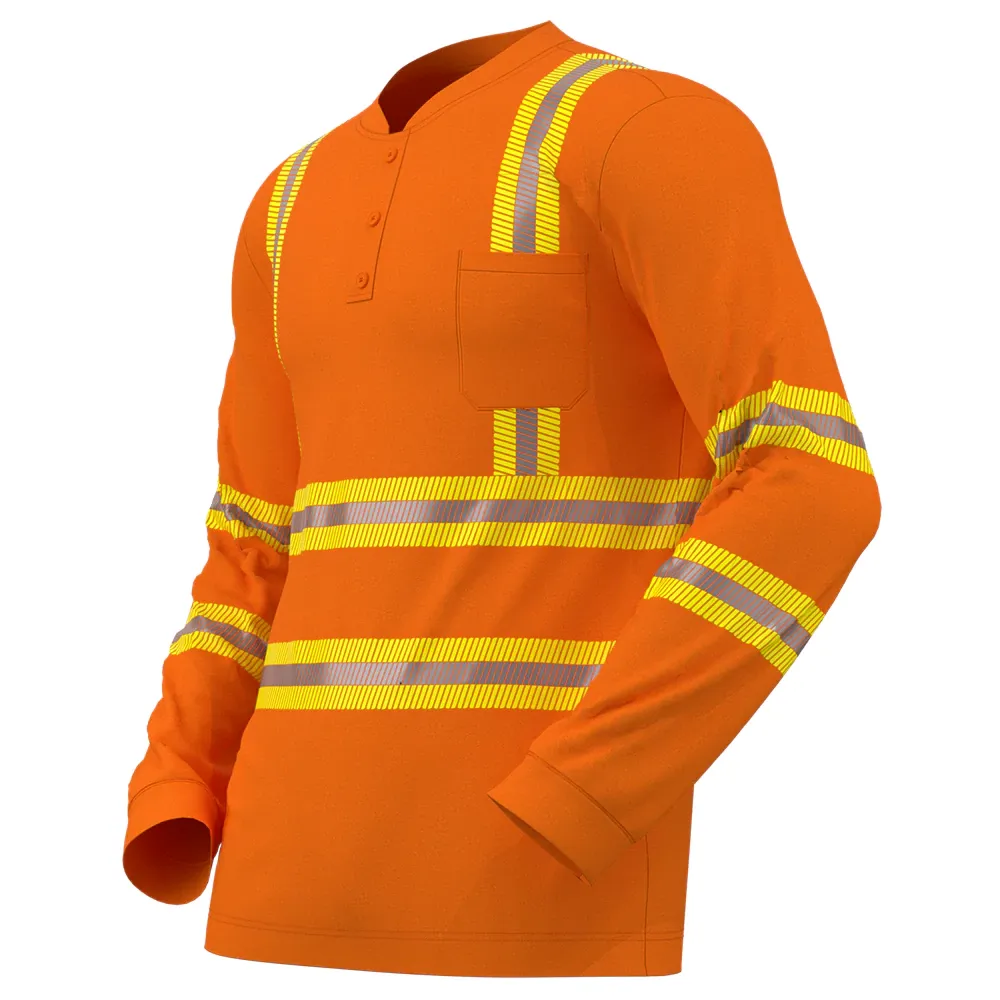
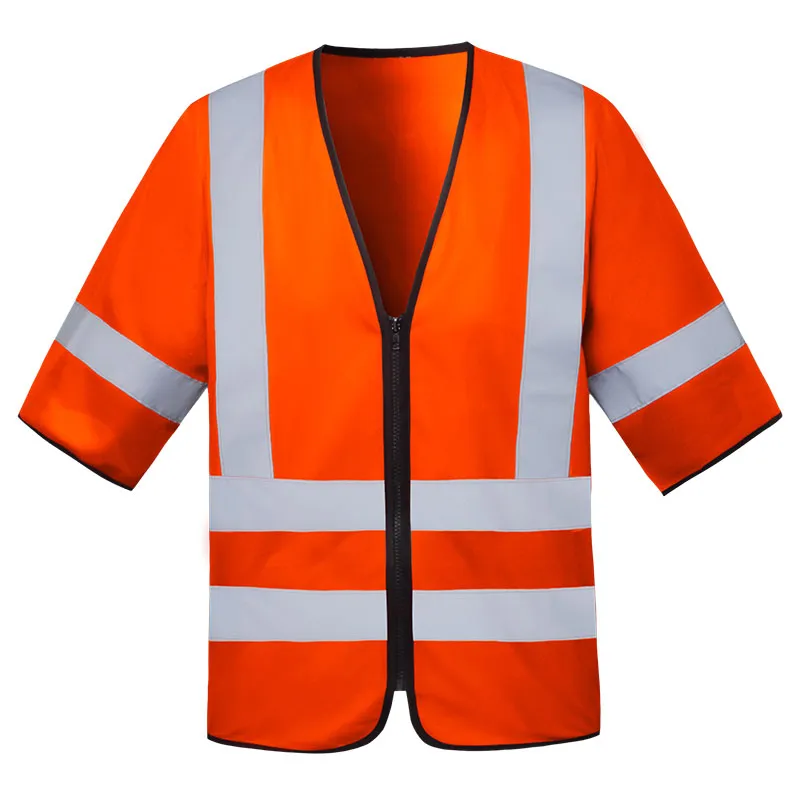
- Is enhanced visibility required?
- How often do workers kneel, lift, or climb?
- Can liquids or contaminants reach the clothing?
A hazard matrix maps tasks to garment requirements directly:
| Task | Hazard or Strain | Garment Requirement | Documentation Needed? |
|---|---|---|---|
| Assembly | Kneeling, reaching, tool carrying | Articulated movement zones, knee pockets, pocket layout | Technical spec |
| Machine operation | Entanglement in moving parts | Controlled fit, no loose elements | Hazard-dependent |
| Outdoor logistics | Traffic and weather exposure | Visibility, weather layer | Product-specific review |
| Welding-adjacent work | Heat, sparks, flame | Specific protective clothing | PPE documentation |
| Chemical process | Liquid or hazardous substance exposure | Material-dependent protective performance | PPE documentation |
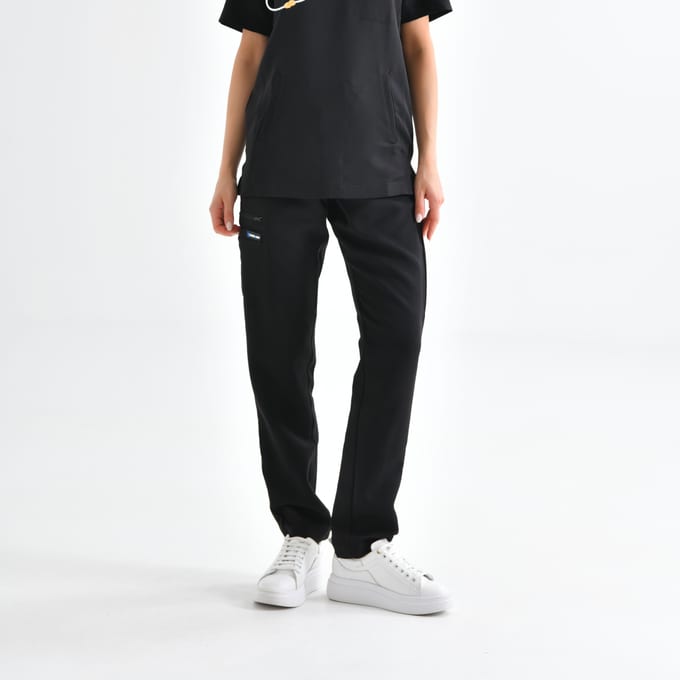
| Warehouse and packing | Movement, abrasion | Durable standard model | Technical spec |
A supplier can support this assessment technically, but the employer owns it and signs off on it, not the supplier.
Workwear, Corporate Uniforms, and PPE Are Not the Same Purchase
Sourcing has to keep three categories separate: identity-driven corporate uniforms, functional workwear, and certified personal protective equipment.
BAuA's own guidance is explicit that general work and corporate clothing usually carries no specific protective function. PPE, by contrast, is classified under EU Regulation 2016/425 into Category I, II, or III depending on the risk it addresses.
| Category | Primary Purpose | Typical Sourcing Question |
|---|---|---|
| Corporate uniform | Consistent brand appearance | Color, cut, and logo |
| Workwear | Function within the normal workflow | Durability, movement, pockets |
| PPE | Protection against a defined risk | Standard, performance class, and conformity |
A rugged-looking coverall is not automatically PPE, and certified PPE can't be treated as ordinary branded clothing once it's on the floor. Instructions for use, service limits, care, service life, and documented protective performance all need to sit inside the clothing program, not in a separate binder nobody reads.
Which Supplier Model Fits the Program?
Industrial buyers generally weigh four supplier models: stock distributors, custom manufacturers, hybrid suppliers, and rental or laundry services.
| Supplier Model | Strength | Limitation | Best Fit |
|---|---|---|---|
| Stock distributor | Fast availability | Limited custom development | Small, short-notice standard needs |
| Custom manufacturer | Own colors, cuts, and models | MOQs and a development phase | Larger, plannable programs |
| Hybrid supplier | Mix of stock and custom | Depends on the specific range offered | Multiple employee groups at once |
| Rental / laundry service | Rotation, cleaning, and replacement | Contract and logistics lock-in | Ongoing reconditioning needs |
You don't have to source every product group from a single model. Standard clothing for office and warehouse staff can run through a different channel than certified PPE for a defined production area. A custom manufacturer matters most when corporate design, non-standard pockets, private label, or recurring volumes are on the table, but that decision should still weigh product lifecycle, MOQs, and reorder feasibility.
Twelve Fields Every Technical Spec Needs
A workable industrial spec keeps design preferences and safety-relevant requirements in separate columns, across at least twelve fields.
At minimum: model name and item code, use case and task, workwear-or-PPE classification, material composition, fabric weight and construction, color with a physical reference swatch, size and measurement chart, pockets and tool holders, closures and concealed elements, reinforcement and movement zones, logo type with position and dimensions, care and reprocessing method, required standards or performance classes, packaging and size labeling, and acceptance criteria with allowable tolerances.
"Heavy cotton trousers" is not a spec. A supplier needs exact figures on composition, weight, construction, color reference, features, and care. For PPE items, standards can't just appear as a buzzword on a quote; the brief has to state the actual performance requirement derived from the hazard assessment. A higher protection class isn't automatically the right answer if it needlessly restricts movement, heat regulation, or how the garment actually gets used.
What Documentation Should a PPE Supplier Provide?
PPE document review covers at least five elements: CE marking, the declaration of conformity, instructions for use, the applicable standard, and product identification.
The consolidated EU Regulation 2016/425 sets the design, manufacturing, and market-access requirements for PPE placed on the EU market. It binds any supplier shipping protective clothing into the EU or EEA, regardless of where the buyer is based. Depending on the product and risk category, check for: an EU declaration of conformity, CE marking, manufacturer and product identification, the standards and performance classes applied, instructions for use in the required language, cleaning, aging, and storage information, notified body involvement where required, and a match between the paperwork and the model actually being shipped.
A product photo, catalog copy, or a certificate carrying a different item number is not sufficient. The model, material variant, and documented protective performance all have to line up. Germany's DGUV Rule 112-989 lists the type and scope of risk, working conditions, and the wearer's physical build as elements the hazard assessment should cover before PPE is selected and put into use. Outside the EU/EEA, your own market's occupational safety authority sets the applicable PPE requirements. Treat this regulation as the reference for anything shipped into Germany, Austria, or elsewhere in the EU, not as a universal standard.
Can You Put a Logo on PPE?
Any change to PPE gets checked against at least three sources before it happens: manufacturer approval, conformity documentation, and the hazard assessment.
Embroidery, printing, extra pockets, or a substituted fabric can all affect protective performance. A needle penetrates the material. A large-format print can change the surface or breathability. An added insert can compromise flame, chemical, or electrostatic properties. The working rules follow from that: don't modify certified PPE without approval, apply logos only in approved zones and methods, never carry a certified claim over to a modified special version, keep product identification and documentation intact after personalization, and sign off on samples for safety performance, not just appearance.
Regular workwear gives you far more logo flexibility. TB Uniform runs embroidery and printing in-house, but for items with a protective requirement, whether and how a given personalization is permitted needs confirmation before production starts. Technical logo choices themselves are covered in company embroidery on workwear; that guide doesn't replace the PPE document review described here.
Sizing a Workforce, Not an Individual
Industrial sizing runs in at least two stages: a chart-based fit check, followed by trying on a representative size set under real movement.
Industrial clothing has to work across body types and across movement profiles. A model that fits standing can pull uncomfortably while kneeling, climbing, or reaching. A proper fitting should walk through, depending on the task: a deep squat, kneeling with loaded pockets, raising arms above shoulder height, bending and torso rotation, stair or ladder movement, sitting in a vehicle or machine seat, reaching for a tool, and wearing the intended base layer underneath.
Women's, men's, and unisex cuts should be compared by actual measurements, not by size label alone. For seasonal systems, check that the base layer, midlayer, and outer shell are actually designed to work together. Personalized pieces should only be finished after size is confirmed. Sample types and size-set logistics are covered in ordering workwear samples.
Checking Capacity and Delivery Reliability
A supplier capacity audit needs at least seven data points: monthly output, minimum order quantity, material sourcing, sample lead time, production lead time, quality control, and shipping model.
A quoted total capacity only means something if it matches your product group. A factory can turn out high volumes of light T-shirts while producing far fewer complex jackets or coveralls in the same period. Worth asking directly: What capacity applies to this specific model? Is material held in stock or sourced per project? How is capacity reserved for repeat orders? Which steps run in-house? How are printing and embroidery scheduled? What quality checks run during and after production? And how are delays communicated?
TB Uniform was founded in 2004 and manufactures in Istanbul, Turkey. Depending on the product type, monthly capacity can reach up to 50,000 pieces, and the minimum order quantity is 100 units per color and model. Once technical details are fully confirmed, a sample typically takes 5–7 business days to produce; after written approval, production and delivery usually take 4–6 weeks. Final scheduling still depends on model, quantity, material, personalization, and destination.
Quality Control Checkpoints Worth Putting in Writing
An industrial control plan should cover at least six checkpoints: material, color, measurements, construction, personalization, and packaging.
| Checkpoint | Example |
|---|---|
| Material | Composition, fabric reference, and weight |
| Color | Match against the approved sample |
| Measurements | Measurement points and tolerances |
| Construction | Seams, bar tacks, closures, and reinforcements |
| Branding | Position, dimensions, and color |
| Packaging | Size labeling and unit count |
A single final inspection is too late for large runs. Quality criteria should be defined before production starts and checked throughout the run, not just at the end. PPE items need product-specific checks and documents layered on top, so decide up front whether you need sampling, third-party testing, or a pre-shipment inspection. The approved sample should be clearly flagged as the reference, and any post-approval changes need a version number and date attached.
Planning for Reorders and Replacement Stock
A long-term clothing program should plan at least 12 months out and account for staff turnover, wear, seasonal demand, and model changes.
A cheap first order gets expensive fast if the fabric, color, or cut can't be reproduced next time you need it. That's why a supplier should archive the model code, technical file, fabric reference, color, measurement chart, and logo files under proper version control. Worth clarifying for replacement and follow-on orders: Does the same MOQ still apply? How long does the fabric stay available? How are shade variations between batches handled? What lead time applies to reorders? Are old and new measurement charts kept separate? How is a product change communicated? And what reserve stock should you hold yourself?
For very small monthly reorder volumes, a centralized buffer stock can be more economical than repeated custom runs that fall below the MOQ.
Comparing Total Supplier Cost, Not Just Unit Price
A real price comparison covers at least 10 cost blocks and doesn't stop at the net unit price of the first order.
| Cost Block | Possible Impact |
|---|---|
| Product | Model, fabric, and construction |
| Development | Pattern, technical file, and custom details |
| Sampling | Number of variants and revisions |
| Sizing | Size set and extended sizes |
| Branding | Embroidery, printing, and variable names |
| Testing | Product-specific tests and documents |
| Packaging | Individual, size-set, or department packs |
| Logistics | Freight, import, and distribution |
| Reserve stock | Replacement stock and staff turnover |
| Reorders | MOQ and material availability |
B2B volume pricing for workwear covers why tiered pricing is only comparable when the underlying technical spec is identical across quotes.
TB Uniform offers project-based custom cuts, colors, models, and private label production, with export experience into Europe and North America. Requirements tied to OEKO-TEX, ISO 9001, GOTS, and REACH can be assessed depending on the product, and any specific document has to match the exact article and scope offered. Once you have a task matrix, models, sizing, logo requirements, and volumes ready, TB Uniform can put together a technical sampling and production quote against them.
Frequently Asked Questions
What should an industrial workwear supplier be able to document?
For standard workwear, expect a technical spec, material data, measurement chart, care instructions, a sample, and a quality control plan. For PPE, add CE marking, the EU declaration of conformity, instructions for use, product identification, and notified body documentation where applicable. Every document needs to match the exact model, material, and configuration actually delivered.
What's TB Uniform's minimum order quantity?
The MOQ is 100 units per color and model. Multiple jacket, trouser, or coverall models can each carry their own MOQ. Companies can reduce the number of variants by standardizing on shared base models and differentiating with allowed color, piping, or labeling changes instead. For PPE, any such variation still has to stay consistent with the applicable conformity documentation.
How long do samples and production take?
Once technical details are fully confirmed, TB Uniform typically produces a sample within 5–7 business days. After written approval, production and delivery usually take 4–6 weeks. Complex models, specialty fabrics, testing requirements, multiple personalization types, large size runs, and destination can all shift the confirmed timeline.
Can a company logo go on protective clothing?
Only if the intended finishing doesn't compromise documented protective performance or legally required marking. Manufacturer approval, the hazard assessment, and conformity documentation all need review beforehand. Embroidery, printing, or added patches can't be applied to certified PPE on your own judgment. Standard workwear generally allows far more personalization flexibility.
How many samples does an industrial buyer actually need?
At minimum, one design-and-function sample to confirm the technical execution. Larger teams should add a representative size set. PPE may require additional product-specific testing or approvals. The right number of samples depends on model variants, body types, tasks, and safety requirements. Production runs shouldn't start before written approval of a clearly identified reference sample.
Which certifications matter for workwear?
It depends on the product and its use. OEKO-TEX addresses textiles tested for harmful substances, while GOTS covers ecological and social requirements across certified textile supply chains. PPE needs product- and risk-specific conformity evidence instead. A supplier's certificate is only relevant once its validity, scope, and connection to the actual material or finished product are confirmed.
Sources
- BAuA: Hazard Assessment (Gefährdungsbeurteilung)
- BAuA: Forms of Protective Clothing
- DGUV Rule 112-989: Use of Protective Clothing
- EUR-Lex: EU Regulation 2016/425 on PPE
- Austrian Labour Inspectorate: Work Clothing
Recommended Alt Text
- Industrial workwear jacket, trousers, and coverall shown next to a task hazard matrix
- Representative size set for industrial clothing being fitted under real work movements
- CE marking and conformity documentation for certified protective clothing
- Seam, color, and branding inspection before shipment from an Istanbul production line