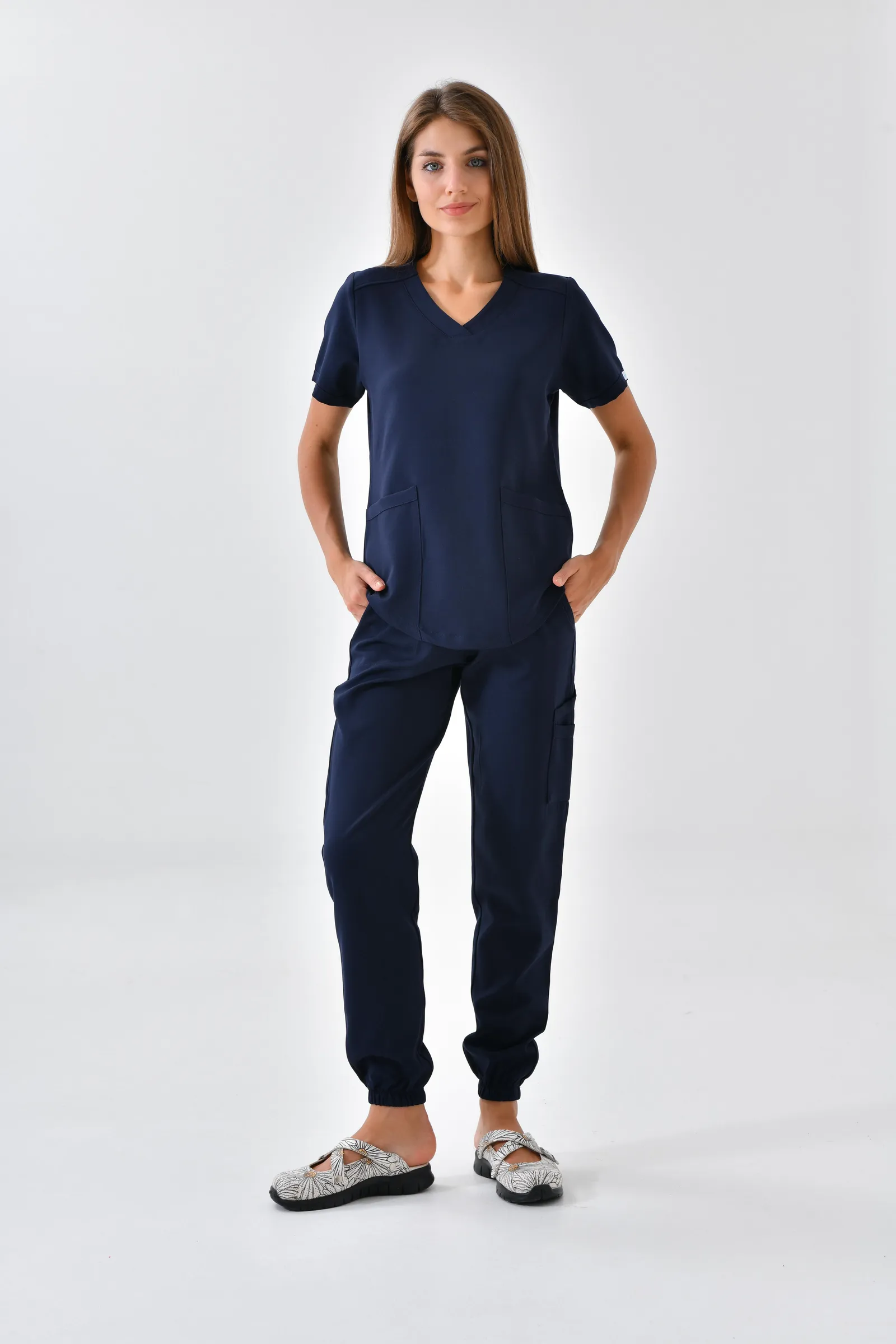
How Do You Request and Approve a Wholesale Scrub Sample?
A scrub sample is only as useful as the request behind it. Send TB Uniform a complete tech pack: technical drawings, a base-size measurement chart, fabric and color specification, authorized logo artwork, label content, and your intended laundering method. The standard sample stage generally takes 5–7 business days once those inputs are confirmed. Before authorizing bulk production, plan to check at least 12 points across construction, fit, branding, labeling, and performance.
What Belongs in a Scrub Sample Request?
A workable request covers at least 12 separate inputs: design, measurements, materials, branding, labeling, quantity, and destination.
Send:
- Front, back, and detail drawings
- A base-size measurement chart
- The measurement method and accepted tolerances
- Size range and grading expectations
- Fabric composition, weight, and color
- Pocket, seam, closure, and trim specifications
- Authorized logo artwork
- Label and packaging content
- The intended workplace and laundering method
- Bulk quantity broken down by model, color, and size
- Any required compliance documents
- Delivery destination and target date
If no technical drawing exists yet, send clear reference photos and specify exactly which features should be copied and which should not. Design rights remain the buyer's responsibility; don't ask a manufacturer to reproduce a protected product without authorization.
The custom scrub manufacturer guide covers broader supplier selection and TB Uniform's 100-piece minimum per color and model.
Which Sample Type Do You Actually Need?
A scrub project typically calls for one of three sample types: a development sample, a fit sample, or a pre-production reference.
State the purpose up front. A development sample tests the initial pattern and construction. A fit sample checks measurements and movement. A pre-production reference confirms the corrected design, materials, branding, labels, and workmanship intended for the bulk run.
"Sample" alone isn't specific enough when what you actually need could be:
- A stock fabric swatch
- A color strike-off
- An embroidery trial
- A printed-logo trial
- A size-set sample
- A finished garment
- A pre-production reference
Each carries its own scope, cost, and approval value. Ask the quotation to state exactly what will be produced, which materials are provisional, and whether shipping is included.
How Do You Verify Scrub Measurements?
Measurement review rests on three controls: one documented method, one calibrated tool, and one approved tolerance table.
Lay the garment flat in the position the method specifies, without stretching it unless instructed otherwise, then compare every point against the approved technical chart.
Common scrub-top measurement points:
- Chest
- Waist and sweep
- Shoulder
- Back length
- Sleeve length
- Armhole
- Neck opening
- Pocket dimensions and placement
- Side-vent length
Scrub-trouser points typically include waist, hip, rise, thigh, inseam, outseam, knee, leg opening, waistband, and pocket placement.
Record the actual figure next to the target and its tolerance. "Fits well" is a comment, not evidence that the sample matches the manufacturing specification.
How Should Fit and Movement Be Tested?
A proper fit review puts the garment through at least six actions: reaching, bending, sitting, walking, lifting, and pocket access.
Test on representative wearers, over the base layers they'll actually wear on shift. Watch coverage, sleeve position, shoulder mobility, trouser rise, waistband security, and whether pockets stay accessible without pulling the garment out of shape.
Keep three types of finding separate:
| Finding | Example | Required response |
|---|---|---|
| Specification mismatch | Chest measurement outside tolerance | Correct manufacturing or pattern execution |
| Fit preference | Buyer wants extra ease | Revise the approved measurements |
| Design change | New pocket or longer vent | Update the tech pack, price, and approval status |
Write every accepted change into the technical file. A comment made only on a phone call or scrawled on an unmarked photo becomes a dispute waiting to happen at bulk inspection.
Which Construction Details Need Inspection?
The construction review should cover at least ten points, from seams and stitching to reinforcement, pockets, closures, hems, symmetry, and finishing.
Check:
- Seam type and allowance
- Stitch density
- Skipped or broken stitches
- Reinforcement at pocket openings
- Pocket dimensions
- Symmetry
- Bar tacks
- Elastic and drawcord
- Hems
- Side vents
- Loose threads
- Pressing and overall cleanliness
One sample can't prove full production consistency, but it can set the approved workmanship reference. The purchase documents should still spell out bulk tolerances, inspection method, sample size, defect categories, and acceptance criteria.
Projects touching broader medical-apparel quality systems should also review the contract manufacturing guide for medical apparel.
How Should Fabric and Laundering Be Tested?
A fabric approval examines at least seven characteristics: composition, weight, color, stretch, shrinkage, colorfastness, and surface durability.
Note whether the sample uses final production fabric. If it's a substitute, say so in the approval record.
For wash evaluation:
- Measure the garment before care
- Follow the intended washing and drying procedure
- Record the settings used
- Recondition the garment consistently
- Measure again
- Inspect color, pilling, seams, labels, and logo
- Calculate the dimensional change
The FTC Care Labeling Rule guidance requires a reasonable basis for covered care instructions and warnings. An institutional commercial-use exemption may apply in specific cases. Confirm whether your distribution model qualifies rather than assuming it does.
Route OEKO-TEX fabric requirements through the OEKO-TEX scrub manufacturer guide, including certificate scope and validity checks.
How Are Embroidery and Labels Approved?
Branding approval needs at least six checks: artwork, size, placement, color, spelling, and how it behaves on the chosen fabric.
TB Uniform handles embroidery and printing in-house. Compare the sample against the approved artwork file, not against memory.
Verify:
- Logo dimensions
- Position measured from fixed garment points
- Thread or print color
- Letter and symbol proportions
- Employee or department spelling
- Backing comfort
- Puckering
- Performance after the intended care process
US-bound textile products may need fiber content, country of origin, and a responsible manufacturer or dealer identification. The FTC apparel-labeling overview is the relevant federal starting point.
Approve label content, placement, language, and ownership before bulk production begins. Placeholder labels on a sample are not final label approval.
Does an Approved Sample Prove Regulatory Compliance?
One approved sample proves zero protective claims unless the required testing, classification, labeling, records, and regulatory pathway also apply.
Ordinary scrubs generally function as work clothing. OSHA guidance notes that scrubs are usually worn like street clothing, and that appropriate gowns, aprons, or lab coats may be needed where splashes are anticipated. See the OSHA Bloodborne Pathogens enforcement guidance for the federal position.
Protective or medical-device claims raise the bar on evidence. The FDA medical-gown guidance explains that surgical gowns are Class II medical devices requiring 510(k) premarket notification.
Never describe a scrub sample as fluid-resistant PPE, a surgical gown, or another regulated protective garment without the design, testing, documentation, labels, and authorization to back it up.
The CPSC's clothing business guidance also flags 16 CFR Part 1610 as the general flammability standard for clothing textiles.
How Should Revisions and Final Approval Be Recorded?
A controlled approval process runs on four statuses: rejected, revise and resample, conditionally approved, and approved for production.
The approval record should identify:
- Project and model code
- Sample version
- Review date
- Reviewer
- Measurements
- Photographs
- Defects
- Requested corrections
- Updated technical files
- Whether another sample is required
- The final approved reference
Don't sign off on a sample while conflicting drawings, measurement tables, or email threads remain unresolved. The final technical pack should fold in every accepted change and carry a version number or date.
"Approved with comments" is a risk unless both sides agree, in writing, which comments must be closed out before bulk cutting starts and how that closeout gets verified.
What Comes After Sample Approval?
After written approval, confirm five commercial points: final quantity, price, payment, production schedule, and delivery responsibility.
TB Uniform was founded in 2004 and manufactures in Istanbul, Turkey. Its standard minimum order is 100 pieces per color and model. A scrub top and a scrub trouser count as separate models.
Production and delivery generally run 4–6 weeks after sample and specification approval. Fabric availability, revisions, order volume, branding, packaging, freight, and customs can all shift the confirmed calendar.
TB Uniform can produce up to 50,000 pieces a month depending on product type, materials, order mix, and scheduling. That figure describes capacity; it isn't a reserved slot or a guaranteed date for any one project.
To move a sample forward, send the current tech pack, measurement chart, sample size, material brief, artwork, label content, bulk quantity matrix, destination, and target deadline through the quote request page.
Sample price, revision allowance, courier cost, fabric-swatch policy, embroidery trial fee, payment terms, sample ownership, bulk pricing, Incoterms, duties, and refundable sample-cost terms all depend on the specific project and require a written quotation.
What Do Wholesale Scrub Buyers Ask About Samples?
These six answers cover timing, required files, sample cost, fit, revisions, and how sample approval relates to bulk production.
How long does a TB Uniform scrub sample take?
Generally 5–7 business days once the tech pack, measurements, materials, artwork, and other project inputs are confirmed. Courier time is separate unless it's written into the agreement. Fabric procurement, complex pattern development, branding trials, or revisions can extend the schedule.
What should a buyer send with a sample request?
Drawings, a measurement chart, tolerances, sample size, size range, fabric and color requirements, pocket and construction details, logo artwork, labels, the care process, any compliance-document needs, projected bulk quantities, destination, and target date. State whether the request is for development, fit, or pre-production confirmation.
Is a scrub sample free?
No free-sample policy is established by the information available. Sample price, courier cost, revision terms, payment, and whether any charge credits toward a later bulk order all require written confirmation in the project quotation. Don't assume requesting a sample is cost-free.
Should a buyer wash the sample before approving it?
Yes, whenever wash performance is part of the specification. Record measurements before and after washing with the intended care process, then inspect shrinkage, color, pilling, seams, labels, elastic, and the logo. Confirm the sample uses final production fabric before treating the wash test as conclusive.
How many sample revisions are included?
The available company information doesn't define a standard number. The quotation should state how many rounds are covered, which changes carry extra charges, whether new materials push out the timeline, and what evidence is needed before a corrected sample or updated technical file gets approved.
Does approving one sample guarantee every bulk garment will match?
No. The approved sample sets the intended reference, but bulk consistency also depends on controlled materials, current technical files, in-process checks, tolerances, inspection criteria, traceability, and documented acceptance. The purchase agreement should spell out how the production lot will be inspected and how nonconforming units get handled.
Recommended image alt texts
- Wholesale scrub sample laid flat for measurement review against a technical chart
- Close-up of scrub seam, pocket, and bar-tack construction during sample inspection
- Fabric swatch card showing composition, weight, and color reference for a scrub order
- Embroidered logo trial on a scrub sample compared against approved artwork
- Signed measurement table and correction notes attached to an approved pre-production sample