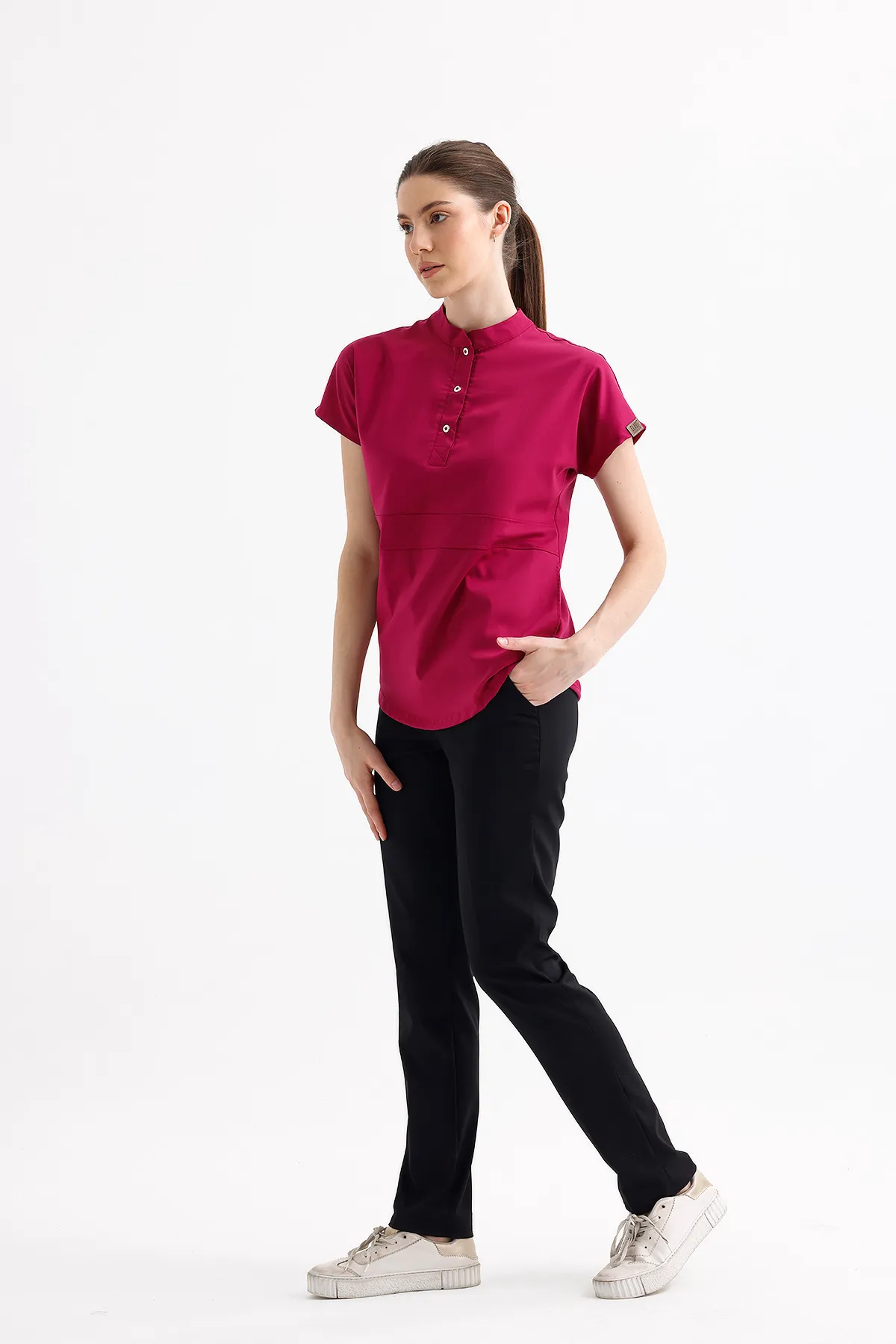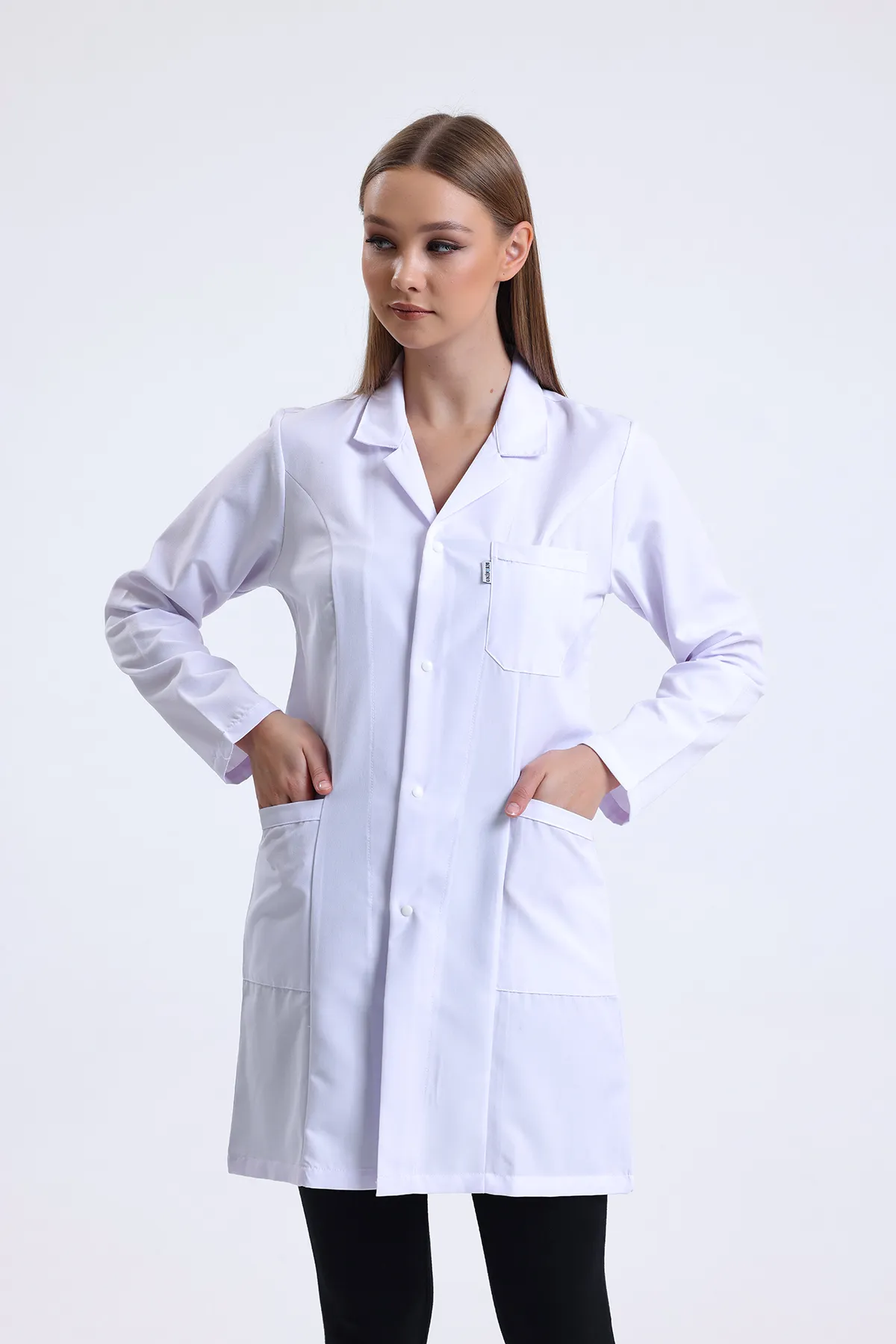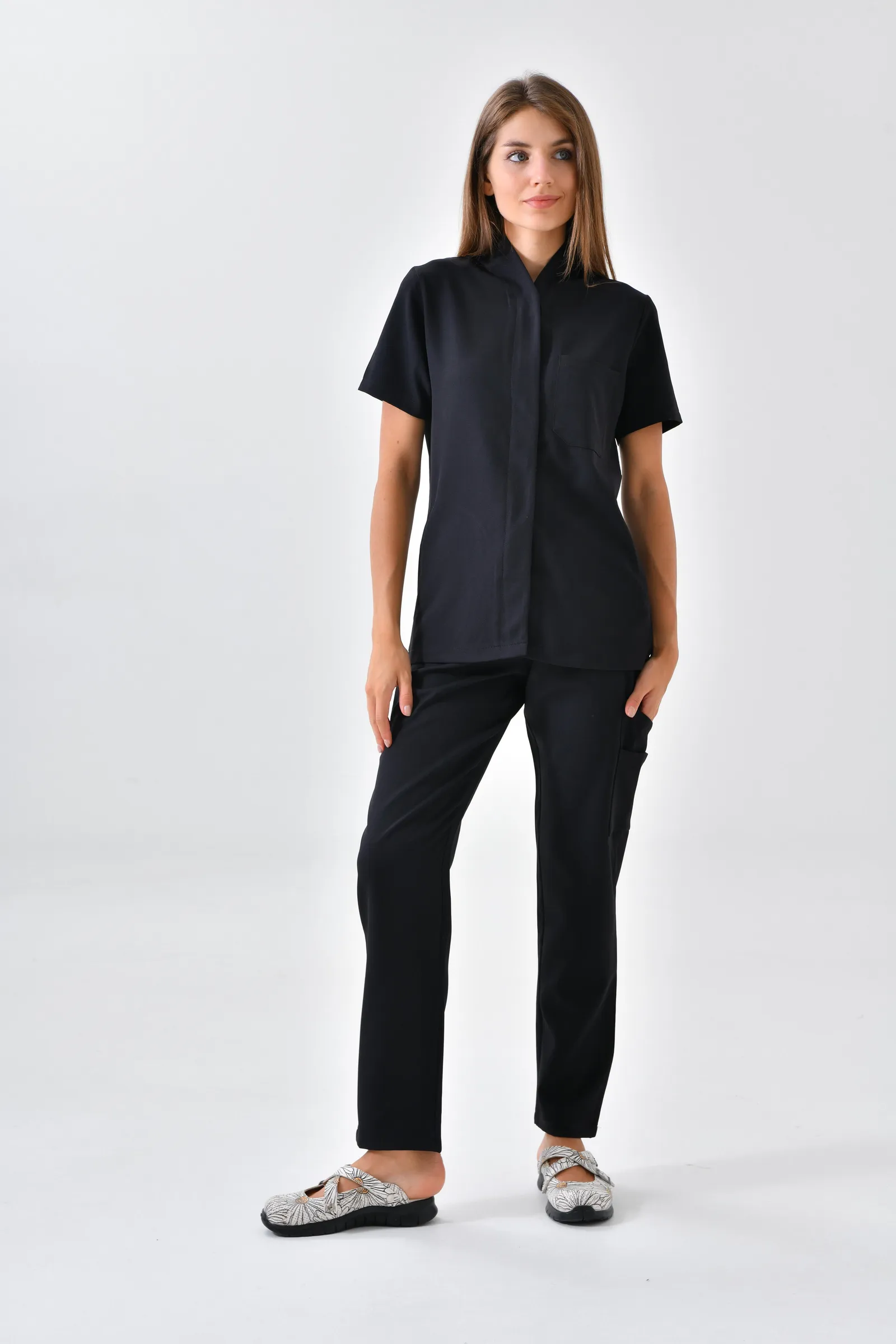
How to Order Wholesale Chef Uniforms
Before a quote request goes out, the order file needs to name the role, the garment model, the fabric, the size run, the color, the logo, and the care method. TB Uniform's minimum is 100 pieces per color and model. Once the required details are locked, a sample takes 5–7 business days; approved production and delivery generally run 4–6 weeks.
What Belongs in the Order Sheet?
An order sheet needs at least 8 fields: role, garment model, color, size, quantity, fabric, logo, and delivery point.
A chef, a line cook working the hot side, a pastry team member, a prep hand, and dish-room staff don't need to wear the same garment. Heat exposure, range of motion, soiling, and wash frequency all differ by role, so each one is worth evaluating on its own terms.
Chef jackets, trousers, aprons, and hats can each be set up as separate models. Because the minimum applies per color and per model, confirm at the quoting stage how your size breakdown lands against that threshold, and whether a shared fabric across different garments counts toward the same minimum or not.
If front-of-house staff are part of the same rollout, the wholesale waitstaff uniforms guide covers that product line separately.
What Needs Deciding on the Chef Jacket?
A jacket technical drawing should show at least 6 details: collar, closure, sleeve, cuff, pocket, and garment length.
A front-closing classic cut, a cross-over (double-breasted) front, or a simpler shirt-style jacket each suit different kitchen workflows. Snaps, buttons, or a concealed placket should be chosen against how the team actually works and how the garment will be laundered.
Sleeve length is a fit decision, not a heat or flame protection claim. A standard chef jacket can't be marketed as personal protective equipment against heat or fire without testing to back it up. Where that kind of hazard exists in the kitchen, the buyer's own workplace-safety officer should identify the applicable standard before specifying anything.
How Do You Choose Kitchen Fabric?
A fabric spec needs at least 4 measurable data points: fiber ratio, weight, dimensional change, and colorfastness.
Kitchen fabric decisions have to account for heat, steam, oil, and frequent washing together, not one at a time. A heavier cloth can look more durable on paper while wearing down staff on the hot line; a lighter weight, on its own, is no guarantee of comfort either.
Run the fabric sample through the kitchen's actual wash and dry cycle before signing off. Oil-stain treatment, bleach use, and high dryer heat all affect color and dimensional stability, so the care label should follow from that test result rather than a generic assumption.
How Do Hygiene Rules Shape the Uniform Plan?
A kitchen apparel plan should cover at least 4 hygiene points: clean garment use, separating soiled pieces, hair control, and a set change schedule.
Turkey's Ministry of Agriculture and Forestry publishes a hygiene implementation guide for mass-catering premises that lays out the framework for personnel hygiene and clean workwear use, and a companion guide for food-retail premises that also addresses keeping workwear suited to the work area. Both are Turkey's domestic guidance; if you're sourcing for kitchens operating outside Turkey, check the hygiene and workwear rule that actually applies in your own jurisdiction rather than assuming this one carries over. Either way, garment quantities per employee should be sized to change frequency and the laundry cycle, not guessed.
How Should Aprons and Trousers Be Specified?
Aprons and trousers each need at least 4 measurements: waist, hip, garment length, and adjustable-tie range.
On an apron, the neck strap, waist tie, pocket placement, and length all need to fit the actual task flow, and long ties carry a real risk of snagging on kitchen equipment that's worth checking for. On trousers, waist construction, leg width, pocket position, and how the garment sits when seated matter more than the label size.
If a piece uses a different fabric or color from the rest of the set, approve it on its own sample. Ordering a chef jacket and an apron under the same color name doesn't guarantee they'll actually match once produced.
How Are Logos and Name Embroidery Handled?
Logo approval needs 4 inputs: measurement in centimeters, placement, thread color, and the embroidery program to be used.
TB Uniform handles printing and embroidery in-house. Chest embroidery shouldn't collide with the jacket's closure or pocket placement, and if employee names or titles are going on the garment, one person on the buyer's side should own the final spelling list.
Dense embroidery can pucker lightweight fabric, so confirm the design on the actual production cloth with a wash trial before committing to bulk production. The custom embroidered workwear page covers the technical side of that process in more depth.
How Should Size and Movement Samples Be Evaluated?
A chef uniform fit trial should cover at least 6 movements: reaching, bending, squatting, sitting, lifting, and brisk walking.
Beyond chest and waist, check shoulder, sleeve, garment length, and hip measurements too. Try the jacket on with the apron, and the trousers with the work shoes staff will actually wear.
TB Uniform's standard sample time is 5–7 business days once the required details are confirmed. Log the sample's fit, movement, fabric behavior, closures, logo placement, and how it holds up in care testing. Approval can run on version numbers the same way the wholesale uniform sample request guide describes.
Is a Food-Safety Certificate the Same as a Garment Certificate?
No. ISO 22000 is a food safety management system standard; on its own, it doesn't certify a chef jacket's fabric or protective performance.
ISO 22000 sets requirements for a food safety management system across the food chain, and Codex Alimentarius's General Principles of Food Hygiene offers an international reference point for hygiene controls.
Both frameworks support how a business manages hygiene; neither one proves the technical specifications of a specific uniform. Fabric performance, care labeling, and product suitability still need to be verified separately.
How Should You Plan MOQ and Delivery?
TB Uniform's minimum is 100 pieces per color and model; approved production and delivery generally take 4–6 weeks.
TB Uniform manufactures in Istanbul and can reach up to 50,000 pieces a month, depending on the product group. The actual production calendar shifts with fabric availability, how many models are in the order, logo application, and the overall order mix. Current unit pricing, fabric and certification scope, and sample or personalization charges get confirmed through a project-specific quote rather than a fixed list.
If you're packaging for more than one hotel or restaurant location, carton labels should carry the branch, model, color, size, and quantity. The wholesale hotel staff uniform guide has a product matrix for coordinating that across departments.
Wholesale Chef Uniform FAQ
These 6 answers cover minimum order, fabric, sizing, logos, sampling, and delivery.
What is the minimum order for chef uniforms?
100 pieces per color and model. Chef jackets, trousers, aprons, and hats can each count as separate models. Confirm before quoting how your size breakdown applies to that minimum, and whether a shared fabric across garments counts toward it.
Which fabric should I use for a chef jacket?
There's no single fabric that works for every kitchen. Fiber ratio, weight, air permeability, shrinkage, and colorfastness all need weighing together, and the institution's actual wash and dry method should be tested on the sample before the care label is finalized.
Can different sizes go into the same order?
Yes, but how that size spread applies against the 100-piece minimum per color and model has to be confirmed project by project. Plan jacket and trouser sizing separately, and check finished-garment measurements against actual staff measurements rather than letter sizes alone.
Can names and logos be embroidered?
Yes. TB Uniform embroiders and prints in-house. You supply the logo file, the centimeter measurement, placement, thread color, and the name list. Confirm on an actual production sample that the embroidery doesn't pucker the fabric and holds up through washing.
How long do sampling and production take?
Once the technical details are confirmed, the standard sample takes 5–7 business days. Production and delivery after order approval generally run 4–6 weeks. Shipping, revisions, fabric availability, and multi-location packaging can all shift the final timeline.
How do I request a quote for chef uniforms?
Share the role list, model drawings, color and size quantities, fabric expectations, logo file, name list, care method, delivery point, and target date. TB Uniform can then confirm sampling, pricing, and commercial terms against that technical file.