How to Choose a Corporate Apparel Supplier
A corporate apparel program only holds together once a supplier can handle at least eight things well: role planning, translating brand colors onto fabric, a coherent garment family, fabric selection, size management, branding, a documented sample approval process, and a workable reorder system. Skip any one of these and corporate apparel stops being a reproducible clothing system and turns back into a one-off logo order. Price comparisons across suppliers only mean something once everyone is quoting the same collection, the same material quality, the same personalization, and the same delivery commitment.
What types of corporate apparel suppliers exist?
Buyers are generally choosing between four supplier models: a stock retailer, a decorator, a custom manufacturer, and a full-service garment manager.
| Supplier model | Strength | Limitation | Best fit |
|---|---|---|---|
| Stock retailer | Fast availability | Little control over colors or cuts | Small teams, simple kitting |
| Decorator | Logo application on existing stock | Locked to the base retailer's range | Campaigns, standard styles |
| Custom manufacturer | Own styles, colors, private labels | MOQ and development lead time | Larger, recurring programs |
| Garment manager | Issuing, inventory, reconditioning | Contract and system lock-in | Decentralized large organizations |
The right model isn't just a function of the first order's quantity. A company with multiple sites, seasonal roles, and steady staff turnover needs a different setup than a single team being outfitted for one trade show. A manufacturer earns its place once cut, color, style, or private labeling need to break away from off-the-shelf ranges; for very small or short-term quantities, a stocked item with controlled decoration can still be the more economical choice.
Corporate apparel is also not the same category as personal protective equipment. When a work area requires protective clothing, the criteria in our guide to industrial workwear suppliers apply on top of free design choices, and take priority over them.
Why does everything start with a role matrix?
A workable collection starts with at least four data points per role: the task, the working environment, functional needs, and the desired brand impression.
A unified look doesn't require everyone to wear the same garment. Reception, sales, service, leadership, and logistics can each get different functional treatment and still read as one company.
| Role | Environment | Functional priority | Possible solution |
|---|---|---|---|
| Reception | Indoors, client-facing | Polished silhouette | Blouse, shirt, tunic, or blazer |
| Sales | Movement, consultation | Comfort and brand presence | Polo, overshirt, or knitwear |
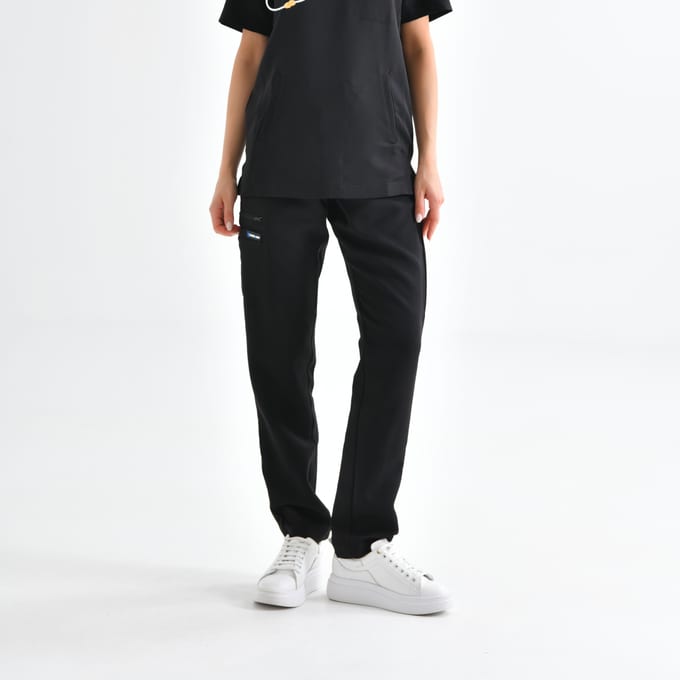
| Service | Indoor and outdoor | Care, pockets, mobility | Functional top and pants |
| Leadership | Meetings, events | More formal presentation | Shirt, blouse, jacket |
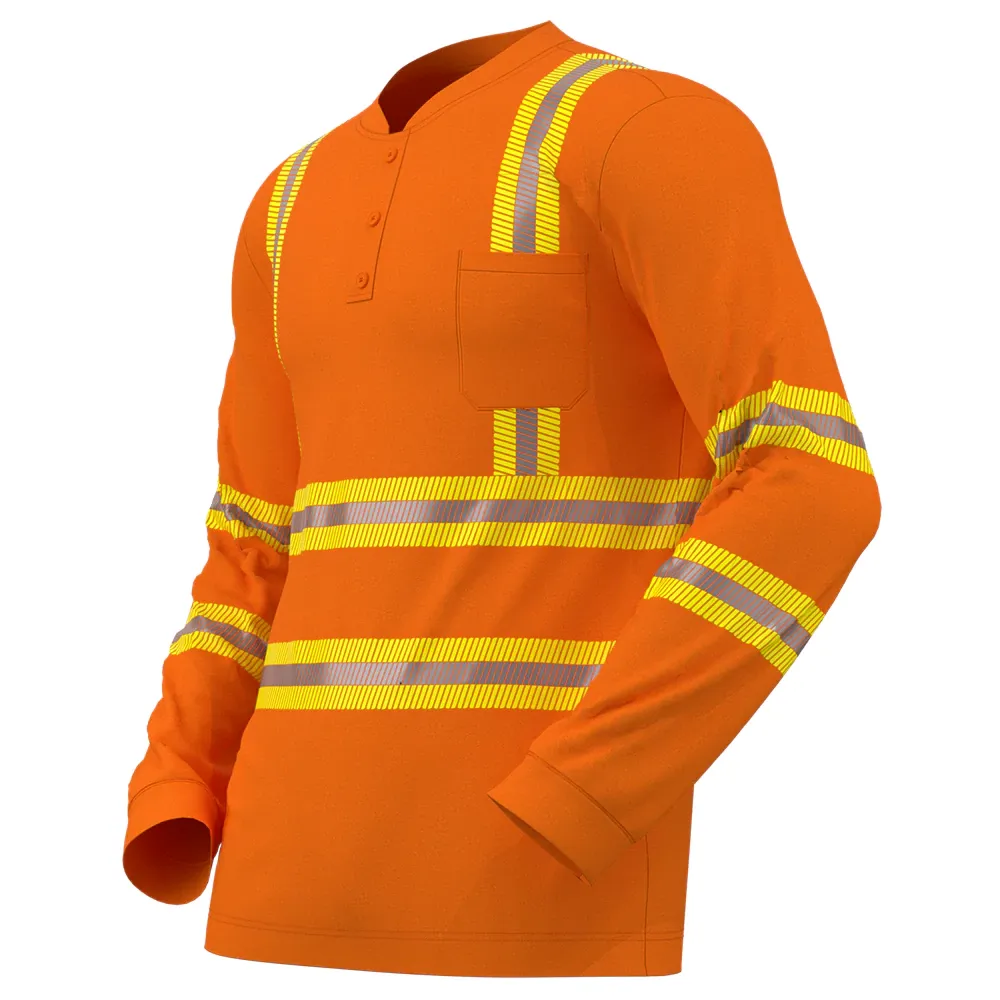
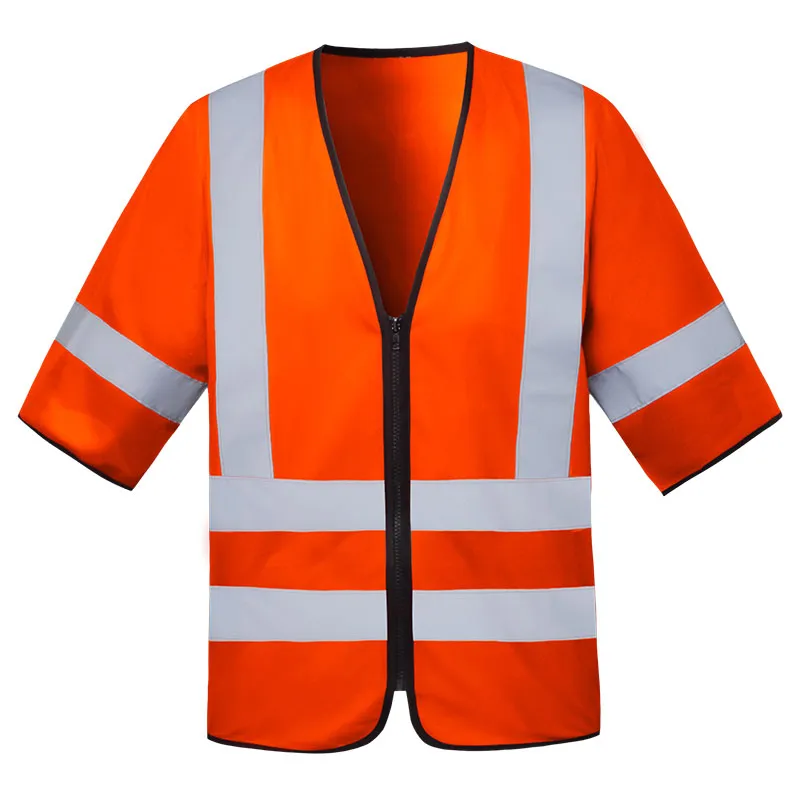
| Logistics | Physical work | Durability and visibility | Task-specific workwear |
The matrix keeps the SKU count under control. Five roles don't automatically demand five completely separate collections. Shared pants, a midlayer, or an outer jacket can usually pair with two or three top variants. A single role can also carry more than one wearing situation: reception staff, for instance, often need a day-to-day base outfit plus a more formal layer for events.
How does a brand identity translate onto fabric?
Translating a brand onto textiles means fixing at least five elements: a base color, an accent color, a silhouette, a logo hierarchy, and a recurring construction detail.
Digital brand colors don't convert directly into a production color. Screen rendering, print values, and textile dyeing all follow different rules, and fabric structure, sheen, fiber blend, and lighting all shift how a color actually reads.
A technical color approval should include:
- the digital brand reference
- a physical color swatch, where one exists
- the approved fabric sample
- a primary and a backup shade
- the acceptable tolerance or comparison method
- how primary, accent, and neutral colors map to each other
- yarn and print color for the logo
A brand can also come through in seam lines, collar shape, pockets, piping, or a recurring contrast panel, which means the logo itself doesn't need to be oversized. A compact mark tends to read calmer than a large-format print for most client-facing roles. Logo size and placement should always get checked on a worn sample, not just on a flat screen mockup.
What makes a collection modular?
A modular collection works across three layers: a shared base, role-specific tops, and a seasonal outer or supplementary layer.
One workable structure:
- Base: pants, a skirt option, or a simple bottom
- Role layer: polo, shirt, blouse, tunic, or overshirt
- Season: knitwear, softshell, jacket, or a weather layer
| System | Advantage | Risk |
|---|---|---|
| One style for everyone | Easy to order | Poor role and fit coverage |
| Many separate collections | High differentiation | Complex inventory |
| Modular system | Shared parts, controlled variety | Needs clear combination rules |
| Free employee choice | High individual freedom | Inconsistent brand image |
A style guide sets out which polo pairs with which pants, jacket, and logo treatment, keeping the collection consistent even across decentralized sites without every location making its own call. For hotels and food-service settings, this modular logic gets a sector-specific treatment in our guide to bulk hotel staff uniforms.
What fabric criteria should the supplier be able to explain?
A complete fabric comparison covers at least seven criteria: composition, weight, construction, hand feel, shape retention, care, and re-order availability.
Fiber composition is only part of the material decision. Two fabrics with identical percentages can behave very differently depending on yarn, weave, weight, and finishing. Buyers should check:
- skin contact and wearing comfort
- opacity in light colors
- elasticity and recovery
- pilling and abrasion resistance
- color behavior after repeated care
- ironing and drying effort
- suitability for embroidery or print
- availability for follow-on orders
Fiber composition labeling and terminology for textiles sold in the EU are governed by Regulation (EU) No 1007/2011; in B2B supply, these declarations can be supplemented or replaced by commercial documentation depending on the case. A supplier worth working with confirms the actual material composition in writing rather than relying on a trade name as a stand-in for fiber content.
How do you build a size system that actually works?
A usable sizing program needs at least three building blocks: a product-specific measurement chart, a representative fit set, and a documented fitting.
A unisex collection doesn't automatically solve fit problems. Shoulder, chest, waist, hip, and length proportions across a real team all need to be accounted for. The supplier should walk through:
- which body or garment measurements get collected
- which size ranges exist per style
- whether women's, men's, and unisex cuts can be combined
- what length options are available
- how special sizes get priced
- how mismatched top and bottom sizes get ordered
- whether the chart can shift on reorders
A representative fit set gets tested in real working postures: reception staff check sitting and standing, service staff add reaching and carrying, field staff test how the piece layers with a jacket or midlayer. Personalized names only get applied after size approval. The full process is covered in our guide to ordering workwear samples.
How do logo, names, and private label stay separate?
A branding plan needs at least four distinct layers: the visible company logo, employee names, functional identifiers, and an internal private-label tag.
Embroidery tends to suit compact logos and a more structured look; print has the edge with gradients and larger graphics. Which one fits depends on fabric, artwork, coverage area, quantity, and care requirements. A technical branding sheet should define:
- logo file and version
- method
- placement
- width and height
- color values or yarn colors
- clearance from seams and pockets
- a version for light and dark fabrics
- variable names and job functions
- label content and placement
TB Uniform runs both printing and embroidery in-house, which lets fabric and decoration get checked together in the same sample run. Private labeling can extend to brand tags, size labels, care labels, and custom packaging; for EU markets, the mandatory textile disclosures and responsibilities need to be handled correctly within that setup. Contract manufacturing and label structure get a dedicated treatment in our guide to private-label workwear manufacturers.
What documentation keeps a collection reproducible?
A reproducible collection needs at least eight controlled documents: model code, technical drawing, fabric, color, measurements, branding, sample approval, and revision status.
ISO 10013:2021 provides guidance on developing and maintaining documented information for an effective quality management system. For corporate apparel, that approach translates into a central product file. It typically holds:
- model name and item code
- technical drawing
- fabric reference and composition
- physical or documented color approval
- size chart with version number
- logo and label data
- photos of the approved sample
- care labeling
- packaging instructions
- a change log
Without version control, different locations can end up working from different logo, color, or measurement charts. Every change needs a date, an owner, and a clear effective-from order. The supplier should also spell out how long a given fabric, color, and set of trims are expected to stay available, and how substitute materials get approved when they aren't.
How do samples and a pilot run fit into the process?
Two checkpoints matter before rollout: a physical design sample and a wearable pilot run across selected roles and sizes.
The design sample confirms silhouette, fabric, color, and logo. A pilot run tests the collection in actual daily work, tracking comfort, care, sizing accuracy, pockets, and combinations over an agreed period. A pilot log typically captures:
- role and location
- style and size
- wear time
- movement and comfort
- color and shape behavior
- care outcome
- feedback on pockets and closures
- suggested changes
- approval status
Not every subjective preference warrants a style change, but recurring feedback across multiple roles is worth evaluating systematically. Once the technical specification is fully confirmed, TB Uniform can normally prepare a sample within 5 to 7 business days; the number of variants and revisions affects the total development timeline.
How should MOQ, capacity, and reorders get evaluated?
The supplier needs to disclose at least six pieces of quantity data: minimum order, style split, color split, capacity, replenishment time, and reorder policy.
TB Uniform was founded in 2004 and manufactures in Istanbul, Turkey. Monthly production capacity can reach up to 50,000 pieces depending on the product category, and the minimum order is 100 pieces per color and style. On a collection with three styles and two base colors, that math can add up to as many as six separate minimums, which is exactly why the style architecture needs to match the actual team size.
Quantities can be kept under control through:
- shared base colors
- a small number of base styles
- role distinctions handled with approved accents instead of separate styles
- shared pants or outer jackets
- variable name personalization instead of full style personalization
- a central reserve stock for common sizes
Once a sample is approved in writing, production and delivery at TB Uniform typically run 4 to 6 weeks; material availability, the number of variants, quantity, personalization, and destination all factor into the confirmed date. TB Uniform has export experience into Europe and North America. For EU-bound projects, labeling, importer-of-record status, trade documentation, and destination-language requirements need to be settled before shipping.
How do you verify sustainability and certification claims?
Every sustainability claim needs at least three checks: a valid certificate, a matching scope, and a demonstrated link to the actual delivery.
A company-level certificate doesn't automatically prove that every item in an order is certified. For GOTS, a Scope Certificate carries a very different weight than a transaction or delivery certificate: GOTS states that a Scope Certificate confirms which product categories a certified entity is generally permitted to process, but it does not prove that a specific shipment is itself GOTS-certified. Using the GOTS logo on the finished product requires meeting the program's separate labeling requirements.
The same logic applies to OEKO-TEX: certificate number, validity, and product scope all need to match the fabric or finished item being offered. "OEKO-TEX compliant" and "OEKO-TEX certified end product" are not interchangeable claims. TB Uniform can factor in requirements tied to OEKO-TEX, ISO 9001, GOTS, and REACH on a project basis, but the specific claim that can be made only gets settled once the actual material, process, and documentation scope have been reviewed.
How do you compare supplier pricing properly?
A full corporate apparel comparison covers at least eleven cost blocks, not just the net unit price on the first order.
| Cost block | Typical content |
|---|---|
| Design | Collection and technical development |
| Cut | Custom style or an adjustment |
| Fabric | Quality, dyeing, and minimums |
| Sample | Variants and revisions |
| Sizing | Fit set and special sizes |
| Branding | Embroidery, print, names, labels |
| Packaging | Individual or per-site packing |
| Logistics | Transport, import, and distribution |
| Reserve | Staff turnover and replacements |
| Reorder | Minimum quantity and lead time |
| Documentation | Product file and certificate review |
A supplier with a higher opening price can still work out cheaper overall through longer material availability, better size planning, and fewer wasted units. The reverse holds too: an elaborate brand presentation doesn't justify a markup if the technical data and delivery model stay vague.
Once a role matrix, brand guidelines, quantities, size structure, and target date are in hand, TB Uniform can turn that into a modular corporate apparel concept and a technical sample quote. Companies ready to move can request a quote to work out samples and terms directly.
Frequently Asked Questions
What's the difference between corporate apparel and workwear?
Corporate apparel prioritizes a consistent brand image across roles and locations. Workwear primarily supports the function of a job. The two categories can overlap, but personal protective equipment stays its own category with product-specific protection and conformity requirements. A corporate apparel collection must never replace or compromise mandated protective clothing through unapproved design changes.
What is TB Uniform's minimum order quantity?
The minimum order is 100 pieces per color and style. Multiple tops, pants, or base colors each form their own minimum, which is why it pays to build the collection around a small number of shared base styles. Roles can often be distinguished through accent colors, piping, names, or functional markers rather than a fully separate style for every group.
How long does developing a corporate apparel collection take?
Once the technical specification is fully confirmed, a first sample can normally be produced within 5 to 7 business days. Additional styles, fit samples, pilot runs, or revisions extend the development phase. After written approval, production and delivery usually take 4 to 6 weeks; material development, custom dyeing, the number of variants, personalization, and destination all affect the final confirmed date.
Can different locations get their own styles?
Yes, but every additional style-and-color combination increases minimums, inventory load, and reorder complexity. A shared base system with location-based names or functional markers is often the more economical route. Style variations should be justified by climate, task, or client contact, and every location should work from the same approved product file and size chart version.
What documentation does the supplier need to start a project?
Buyers should be ready with brand guidelines, a role list, desired items, quantities, size structure, working conditions, a care concept, target countries, and a target date. Logos and graphic marks should be supplied as vector files, and a physical color reference improves textile color matching. If a collection already exists, sample pieces, size charts, and reorder history are especially useful.
Is corporate apparel with GOTS or OEKO-TEX automatically sustainable?
No. These standards assess different things and only apply within their documented scope. A Scope Certificate alone doesn't prove a specific GOTS-certified shipment, and OEKO-TEX claims require checking the certificate number, product scope, and validity. Sustainability communication should also account for material use, garment lifespan, care, transport, repair, and replacement needs.
Sources
- ISO 10013:2021: Guidelines for documented information
- EUR-Lex: Regulation (EU) No 1007/2011
- GOTS: Certification and Scope Certificates
- GOTS: Who needs to be certified?
- OEKO-TEX STANDARD 100
Alt Text Recommendations
- Modular corporate apparel collection with shirt, polo, tunic, pants, and jacket
- Technical color approval with a fabric swatch, color card, and logo yarn color
- Representative fit set being tested in a typical working posture
- Product file with a style drawing, size chart, logo data, and change log