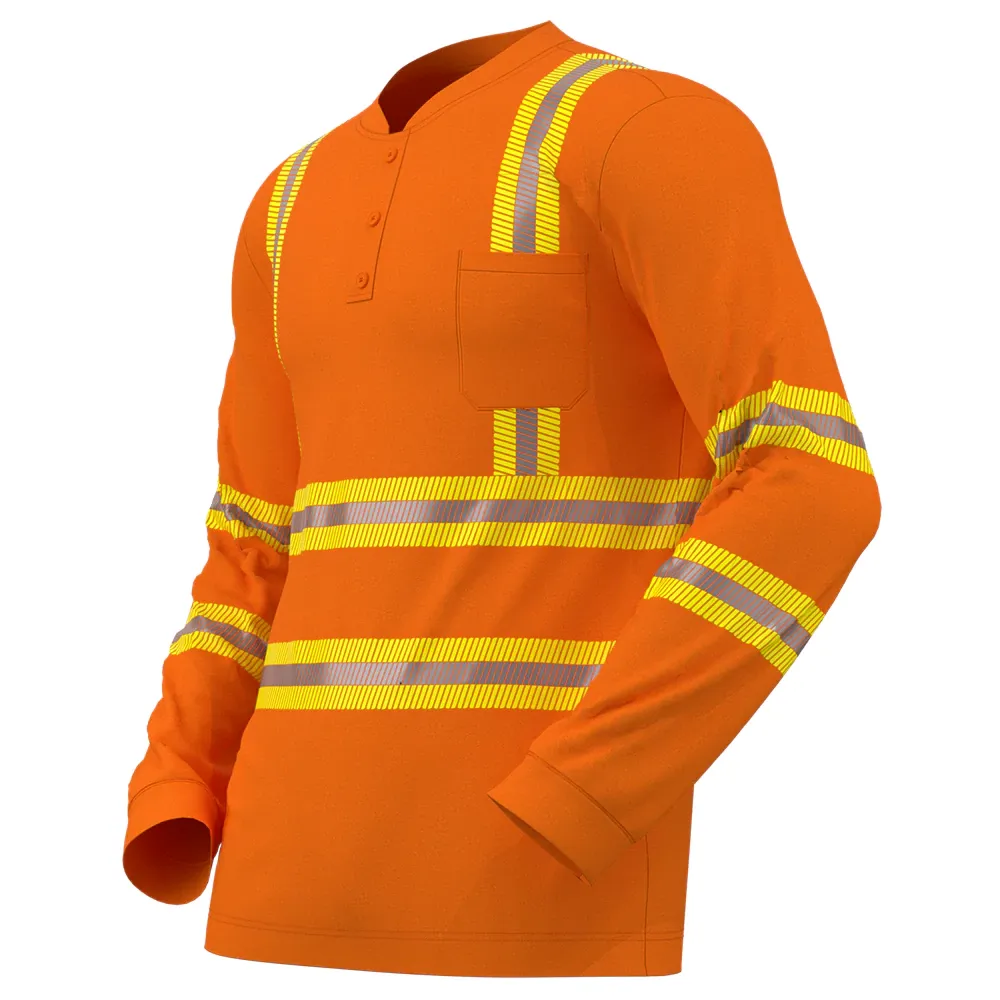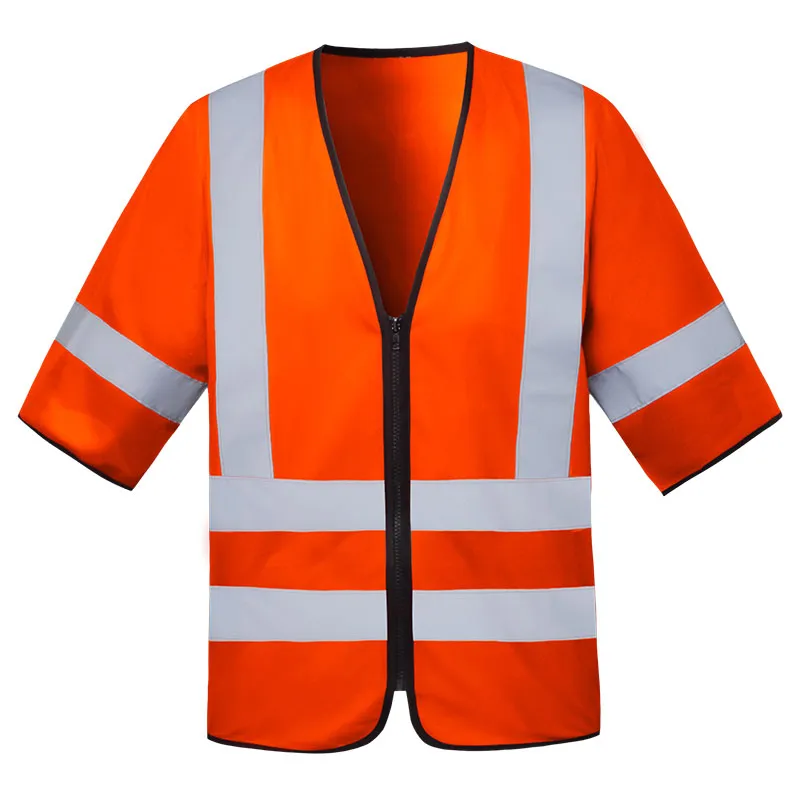
How to Order High-Visibility Workwear for the German and Austrian Market
A US-based sourcing team placing a high-vis order for a German or Austrian client is working under a different rulebook than the one written on ANSI/ISEA 107 spec sheets. Buyers there specify class, testing, and paperwork under DIN EN ISO 20471 and DGUV guidance, not OSHA. That distinction matters before a single garment is chosen. Class, size, company logo, laundering, and general wear all affect how much of the required warning surface actually survives on the finished piece, and whether the protection class printed on the label still holds up in practice.
When Does a Company Actually Need High-Visibility Workwear?
A German or Austrian workplace needs high-visibility workwear whenever the risk of a worker being missed can't be controlled by technical or organizational measures alone.
That covers road construction and maintenance, waste collection and street cleaning, work in live traffic, rail and track areas, vehicle and machine guidance, internal plant traffic, warehouse zones with dark corners, and roadside breakdown, maintenance, or survey work. DGUV Information 212-016 (November 2025 edition) starts every selection with a hazard assessment, not a product catalog, and it also covers combining hi-vis with weather, flame, and cut protection. Traffic speed, sightlines, weather, time of day, how long a worker stays exposed, and the actual work movements all shape which garment is appropriate. A vest isn't a default answer for every job that carries some risk.
Which DIN EN ISO 20471 Class Applies?
DIN EN ISO 20471 defines 3 classes, and the one a job needs is set by risk level and the minimum area of background and retroreflective material.
| Class | Baseline | Typical procurement context |
|---|---|---|
| Class 1 | Lowest minimum area | Only for assessed, limited-risk tasks |
| Class 2 | Mid-range minimum area | Common for straightforward traffic exposure |
| Class 3 | Highest minimum area | Elevated risk, darkness, or fast-moving traffic |
According to DGUV's FAQ on protective clothing, Class 2 can be sufficient where the hazard is limited, visibility is adequate, and average traffic speed stays under 60 km/h. Class 3 becomes necessary in poor visibility, in darkness, or where average traffic speed exceeds 60 km/h. These reference points don't replace a site-specific hazard assessment, and sector-specific rules can be stricter.
One detail buyers frequently miss: Class 3 isn't a fixed property of a product name. A top in a smaller size may only reach Class 2 because it simply carries less material area, while the same model in a larger size clears Class 3. Labeling and manufacturer data have to be checked by size, not just by model.
What Warning Colors Are Actually Permitted?
The standard sets 3 fluorescent base colors (yellow, orange-red, and red), and which one is permitted depends on the work environment.
Within the scope of German road traffic regulation, DGUV names fluorescent yellow and fluorescent orange-red as the permitted colors. Fluorescent red can be used outside that scope, provided the hazard assessment and product documentation support it. The practical goal is contrast against the actual surroundings: orange-red tends to stand out better against green vegetation, while yellow often reads more clearly against orange machinery. Dark blue or black material doesn't count as fluorescent background, and reflective tape alone doesn't turn dark workwear into DIN EN ISO 20471 compliant garments. Corporate color blocking can't shrink the mandated fluorescent area below what the standard requires.
Can a Jacket and Trousers Reach Class 3 Together?
A combination only counts as Class 3 if the manufacturer specifically designates those 2 garments and sizes as an approved system.
A jacket in XS or S may not carry enough fluorescent area on its own to reach Class 3. It's the manufacturer's labeling that determines whether it reaches the required class only in combination with a specific pair of hi-vis trousers. Before ordering, check the class of each individual garment, the class of the approved combination, which size pairings are permitted, how the reflective tape is arranged, visibility with the jacket closed, coverage lost under winter or rain layers, and how a tool vest, harness, or other PPE affects the system. An uncertified piece can't simply be added into a protective combination. Every visible outer layer has to be compatible with the hi-vis concept.
For a broader supplier comparison across industrial workwear categories, see our guide to industrial workwear suppliers.
Is a Company Logo Allowed on High-Vis Garments?
A logo can't reduce the mandated minimum area or performance of the fluorescent background and retroreflective materials.
DGUV specifically warns against altering certified hi-vis clothing with a print or emblem without testing. On smaller sizes especially, a logo can eat into the fluorescent minimum area enough to drop the garment below its stated class. Before printing or embroidering, confirm at minimum: is the personalization approved by the manufacturer, which areas can actually carry it, how large can the logo be, does it cover background or reflective material, does color fastness hold after finishing, and does the approval extend down to the smallest size in the run.
Adding a logo purely for branding isn't acceptable on PPE. TB Uniform runs printing and embroidery in-house, but high-visibility garments are only personalized within a documented, approved configuration. General branding for standard workwear is covered in our guide to embroidered company logos on workwear. For hi-vis product, the safety approval takes priority over that process.
How Are Combined Hazards Handled: Weather, Flame, or Cut Risk?
When 2 or more hazards overlap, the garment has to satisfy every required protection function as one documented system.
A hi-vis jacket isn't automatically rainproof, and a hi-vis vest layered over flame-resistant clothing doesn't automatically create an approved protective system. The same applies to cut resistance, cold protection, or electrostatic requirements. None of those can be assumed from a single material spec sheet. Common combinations include hi-vis with weather protection, cold protection, flame resistance, cut resistance, limited electrostatic requirements, or fall protection. Each added function needs its own product evidence, labeling, and usage information; the hazard assessment determines which combination is actually required.
For companies operating in Austria, the Austrian Labour Inspectorate lists hi-vis clothing under ÖNORM EN ISO 20471 within its broader protective-clothing evaluation, and Austrian operations also need to account for the PSA-V ordinance and a workplace-specific evaluation on top of the EU standard.
What Documentation Should Be Checked Before Purchase?
At least 6 items should be on file: CE marking, declaration of conformity, the standard and class, usage instructions, and unique product identification.
High-visibility workwear is PPE, and its placement on the EU market is governed by Regulation (EU) 2016/425. A proper document check covers the EU declaration of conformity, CE marking, DIN EN ISO 20471 with the stated class, model and article number, size-related restrictions, approved garment combinations, manufacturer information and instructions for use, maximum or tested care cycles where specified, personalization notes, and manufacturer/importer details. The certificate has to match the exact model, material, and size range actually being supplied. A generic supplier letter, or a certificate for a similar product, isn't sufficient.
How Do You Verify Sizing and Range of Motion?
A size set should cover at least 5 movements: bending forward, raising arms, kneeling, torso rotation, and getting into a vehicle.
High-vis garments should be tested in the way they'll actually be worn: winter jackets over the intended base layers, trousers alongside work boots, knee protection, and tools. Oversized garments catch on machinery and equipment; undersized garments ride up during movement, shift the reflective tape out of position, or prevent proper closure. A clean sizing sign-off records the employee code, model and size, seasonal combination, whether the movement test passed, sleeve and leg length, compatibility with other PPE, and the approved class of the individual piece or combination. The sampling and size-run process is covered in more depth in our guide to ordering workwear samples.
How Should Care and Replacement Be Managed?
High-visibility workwear needs at least 4 ongoing checks: cleanliness, color, reflective material, and mechanical damage.
Dirt, fading, abrasion, holes, and damaged reflective tape all reduce real-world visibility. An inspection plan should define who cleans the garments, which wash process is permitted, whether maximum care cycles are specified, how issuance is tracked per employee, when visual inspections happen, which types of damage trigger immediate removal from service, and how replacement sizes stay available. Labels, straps, or accessories shouldn't sit permanently on reflective tape in a way that limits its warning effect. Heavy soiling isn't just a cosmetic issue either.
How Does an Order Actually Move Through TB Uniform?
A high-vis project needs 5 sign-offs: hazard assessment, class, product documentation, sizing, and approved personalization.
TB Uniform was founded in 2004 and manufactures in Istanbul, Turkey, with monthly production capacity reaching up to 50,000 pieces depending on the product category. The minimum order quantity is 100 pieces per color and model. Custom models, colors, and private-label programs are available project by project, but for high-visibility clothing, the standard, protective area, and conformity always take priority over open design changes. A custom configuration only ships as PPE with matching product-specific evidence behind it.
Once technical specifications are fully confirmed, a sample typically takes 5–7 business days. After written approval, production and delivery usually run 4–6 weeks; testing, certification scope, material availability, order volume, and destination can shift that timeline. TB Uniform exports to Europe and North America. A quote request should already include the hazard assessment, required class, sizes, seasonal variants, quantity, and the personalization you want applied.
What Belongs in a Quote Comparison?
A proper B2B comparison should hold at least 10 identical line items, so class, documentation, and approved personalization don't get lost behind the unit price.
| Line item | Information required |
|---|---|
| Use case | Task, traffic exposure, and visibility conditions |
| Standard | DIN EN ISO 20471 |
| Class | Per garment and per approved combination |
| Sizing | Restrictions on the smallest sizes |
| Color | Permitted fluorescent base color |
| Additional hazards | Weather, flame, cut, or cold |
| Logo | Approved position and maximum area |
| Documentation | Conformity, CE marking, and instructions |
| Care | Wash process and replacement thresholds |
| Timeline | Sample, approval, production, and delivery |
Bulk pricing is only comparable when every supplier is quoting against the same standard, class, garment construction, and documentation scope. Broader cost factors are covered in our guide to B2B volume pricing for workwear.
Frequently Asked Questions
Is a yellow vest automatically compliant high-visibility workwear?
No. Color and reflective tape alone don't prove compliance. For professional tasks with real visibility risk, the product needs to be tested to DIN EN ISO 20471, correctly labeled, and accompanied by the required documentation. Dark clothing with added reflective tape, or a casual hi-vis vest, doesn't automatically meet the requirements for workplace high-visibility clothing.
Which class does my operation actually need?
That's set by a task-specific hazard assessment covering visibility conditions, traffic speed, traffic volume, work duration, environment, and time of day. DGUV points to Class 3 for conditions like darkness, poor visibility, or average traffic speeds above 60 km/h. Sector rules and site-specific conditions can raise the requirement further.
Can a large logo be printed on the back of a hi-vis vest?
Only if manufacturer approval and product documentation confirm that the required minimum fluorescent area, color fastness, and protection class are preserved. On smaller sizes especially, a large logo can drop the garment below its stated class, so the approved position and maximum area need to be checked against the specific model and its full size range before finishing.
What's TB Uniform's minimum order quantity?
100 pieces per color and model. A jacket, trousers, vest, or seasonal variant can each count as its own model. For high-visibility clothing, variant planning shouldn't be driven purely by volume efficiency. Every variant and combination needs the class, labeling, and product-specific documentation its actual use requires.
How long do sampling and bulk production take?
Once technical specifications are fully confirmed, a sample typically takes 5–7 business days. After written approval, production and delivery usually run 4–6 weeks. Required testing, documentation, special materials, multiple size combinations, and personalization can extend that timeline, and production shouldn't start before PPE and sample approval are both complete.
When does high-visibility workwear need to be replaced?
Whenever damage, heavy soiling, fading, or degraded reflective areas put the required protective effect in doubt. Manufacturer care and service-life guidance also applies on top of that. Regular visual inspections and sufficient replacement stock should be documented. A damaged hi-vis jacket shouldn't stay in service just because part of it still looks visible enough.