How Do You Choose Scrubs for a Veterinary or Dental Clinic?
A vet clinic and a dental practice can order from the same catalog, but they shouldn't order the same garment without checking the job first. The two roles put different physical demands on a uniform, so model, fabric, sizing, pockets, and care instructions need to be worked out separately, not assumed to match. TB Uniform's minimum order is 100 pieces per color and style. Once specs are locked, samples take 5-7 business days, and confirmed production plus delivery generally runs 4-6 weeks.
Can vet techs and dental staff wear the same scrub style?
Often, yes, but not without comparing at least four things: range of motion on the job, how often the wearer contacts fluids, the equipment carried in pockets, and how the garment gets laundered.
Veterinary staff lift animals, crouch, and pick up hair and dirt constantly. Dental staff sit for extended stretches, repeat arm motions, and work close to aerosols and clinical surfaces. Both roles can start from a similar scrub block, but pocket placement, neckline, sleeve cut, and fabric structure should still be reviewed task by task. For procedures that call for protective garments, a standard scrub set should never be treated as a substitute.
Buyers scaling a clinic-wide order can start with the bulk clinic staff apparel guide.
How should order quantity be planned?
Scrub tops, pants, lab coats, and jackets can each stand as separate models, and each one carries its own 100-piece minimum per color-style combination. A vet clinic's color palette and a dental practice's color palette typically become two separate production blocks rather than one shared run.
An order sheet needs at least eight fields: role, style, color, size, quantity, fabric, logo placement, and delivery point. How the size breakdown fits inside the 100-piece minimum has to be confirmed project by project. Staff count alone isn't enough: factor in changeover frequency, laundry turnaround, backup stock, and staff turnover.
What should drive the fabric decision?
Veterinary work means constant hair pickup and frequent soiling; dental work means long sitting periods and repetitive arm movement. Both push the fabric decision in different directions. If you want a fluid-repellent or antimicrobial finish, ask for the active agent, the test method, wash durability, and the exact performance claim in writing. A fabric labeled "antimicrobial" doesn't prove the claim on its own.
OEKO-TEX STANDARD 100 certification screens textile products and components for a defined list of harmful substances. It does not, by itself, prove biological protection, fluid-barrier performance, or antimicrobial effectiveness. A fabric spec should include at least four measurable data points: fiber content, weight (GSM), shrinkage, and colorfastness.
Where's the line between everyday scrubs and protective clothing?
Even when the same staff member wears both back to back, everyday clinic scrubs and personal protective clothing sit in different risk categories with different documentation requirements. The CDC's dental personal protective equipment guidance explains that protective garments should be selected based on the type of exposure involved, and the CDC's standard precautions summary makes the same point: apparel decisions belong inside the practice's infection-control program, not outside it.
TB Uniform manufactures the garments; it doesn't issue a compliance determination. Whether a given scrub or lab coat satisfies your infection-control or workplace-safety obligations is a call for your practice's own compliance and safety staff, checked against the rules that apply in your state and facility.
How does veterinary task risk shape the scrub design?
The CDC/NIOSH safety guidance for veterinary workers covers animal-related injury, biological hazards, and ergonomic risk through a prevention lens. A scrub set doesn't eliminate those risks on its own, but the design shouldn't add to them either. Fit trials should include crouching, lifting an animal, reaching, and quick direction changes.
Pockets shouldn't hold anything sharp or contaminated. Collar, sleeve, and hem construction need a second look for snag risk during animal contact. If a procedure calls for an additional protective layer over the front of the body, that's a separate technical spec, not an add-on to the standard scrub.
How should pocket and collar details get specified?
For dental staff, collar gap and pocket contents both need to stay under control while bending forward. In veterinary settings, larger pockets earn their keep, but a heavy load can swing during movement or snag on an animal. Requests like a pen slot, a phone pocket, or a zip pocket need to be defined against actual tool dimensions, not picked off a catalog photo.
A technical drawing should show at least six details: collar, sleeve, pocket, side vent, garment length, and stitch reinforcement points.
How should sizing and movement samples get approved?
Chest, waist, hip, garment length, sleeve, and inseam measurements need to be checked model by model. Dental scrubs get tested on a stool at working height; veterinary scrubs need to be tried through crouching and lifting motions. A full fit trial should also cover sitting, bending, reaching, and brisk walking.
TB Uniform's standard sample lead time is 5-7 business days once the required specs are confirmed. You can track measurements, movement notes, pocket approval, logo sign-off, and care instructions through the versioned record process on the bulk uniform sample request page.
How should logos and role information be applied?
TB Uniform handles printing and embroidery in-house. A clinic logo shouldn't overlap with a pocket or an ID badge. If staff names, job titles, or department colors are going on the garment, one person should own the accuracy of that data list. Logo sign-off should cover four things: size in centimeters, placement, color, and print or embroidery technique.
On protective garments, embroidery or printing can affect the technical file, so application shouldn't happen without sign-off from the person responsible for that spec. The process for company-specific embroidery on standard uniforms is covered in the custom embroidered workwear guide.
When should a lab coat be a separate product?
A coat used in a veterinary lab or a dental prosthetics unit doesn't have to match the exam-room scrub pattern. If it needs knee length, long sleeves, a closable front, or a different cuff, that calls for its own model and its own technical file. Either of two reasons is enough to justify treating it separately: a different task risk, or closure and length that differ from the scrub model.
The distinction between a standard lab coat and a protective product is covered further in the bulk lab coat guide. Protective scope should be confirmed by risk assessment and compliance documentation, not by the product's color or name.
How should MOQ and delivery timing get planned?
TB Uniform manufactures in Istanbul and can scale up to 50,000 pieces per month depending on the product category. The minimum order is 100 pieces per color and style; once an order is confirmed, production and delivery generally run 4-6 weeks. The exact schedule depends on fabric availability, how many styles are involved, logo application, and the overall order mix.
Carton labels should carry clinic name, style, color, size, and quantity. For multi-location orders, split quantities by site and spell out shipping and customs scope in the written quote. You can request a sample and quote from TB Uniform once the technical spec is ready.
FAQ
What's the minimum order for veterinary and dental scrubs?
100 pieces per color and style. Scrub tops, pants, jackets, and lab coats can count as separate models. How different clinic colors and size breakdowns apply to that minimum should be confirmed in writing before quoting.
Can vet clinics and dental practices use the same fabric?
They can, but the decision should be based on task risk, movement, soiling, care method, and fluid contact, not convenience. Fiber content, weight, shrinkage, and colorfastness need to be verified on the sample, and any protection claim needs separate documentation.
Can different sizes go into one order?
Yes, but how the size breakdown applies to the 100-piece-per-color-and-style minimum needs project-level confirmation. Veterinary and dental scrubs should be trial-fitted separately, using each role's actual movements.
Can a clinic logo and staff names be added?
Yes. TB Uniform handles printing and embroidery in-house. The buyer supplies the logo file, size, placement, color reference, and staff name list, and the result gets approved on the actual production fabric for appearance and wash performance.
Are standard scrubs considered protective clothing?
Not automatically. Standard scrubs typically function as everyday clinic apparel. Any claim of protection against a biological agent, fluid, chemical, or other hazard needs its own risk assessment, applicable standard, test report, label, and instructions for use.
How do I request a quote for clinic uniforms?
Share a role list, risk assessment, style, fabric, color and size quantities, pocket details, logo file, delivery point, and target date. TB Uniform can be reached through that technical file for samples and pricing; protective-product scope should be confirmed separately.
Suggested Alt Text
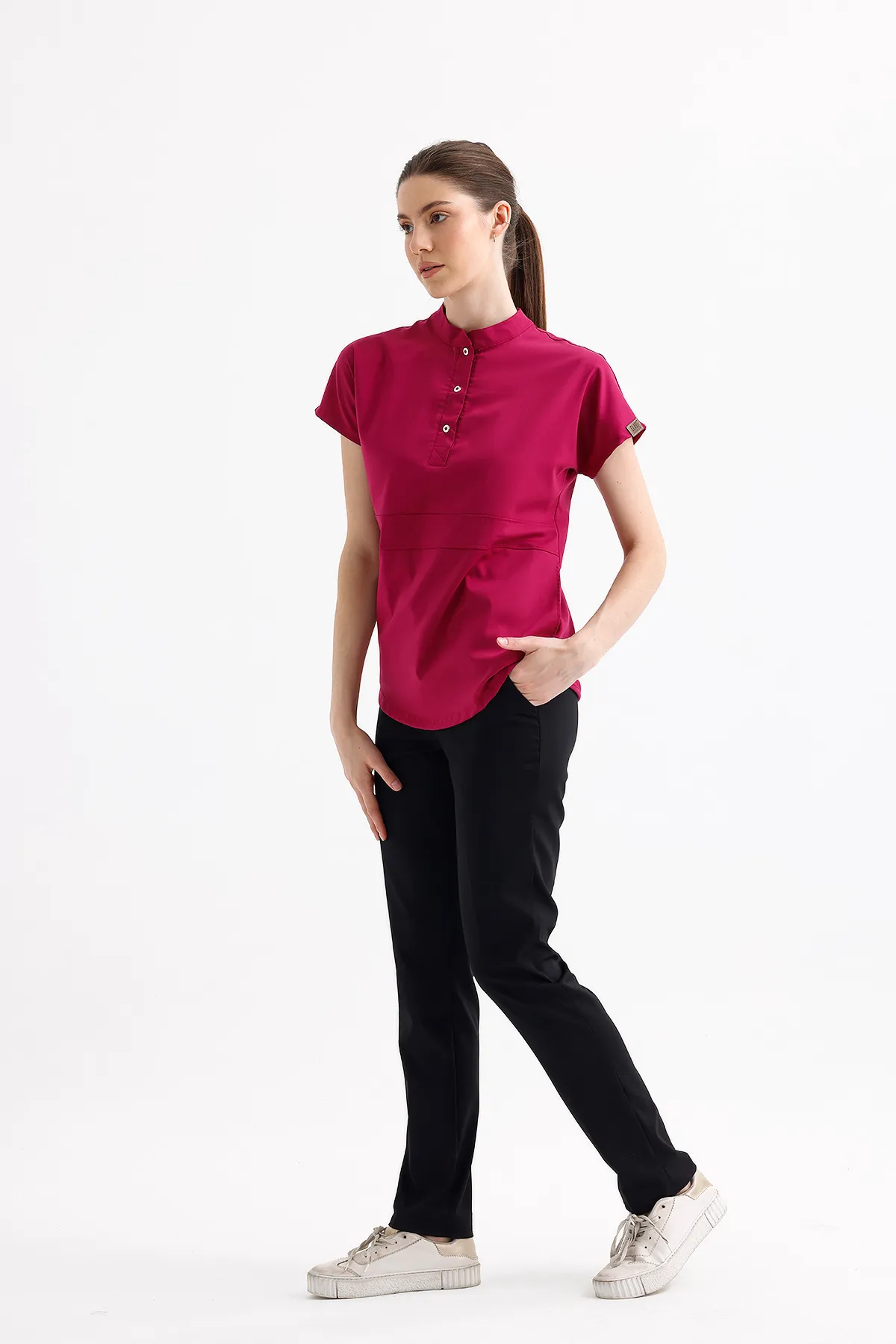
- Scrub styles with distinct pocket and collar construction for veterinary clinics and dental practices
- A veterinary staff member testing a scrub sample through crouching and lifting motions
- A dental team member checking sleeve, back, and collar comfort on a stool during a scrub fitting
- Veterinary and dental clinic scrubs marked with clinic logo, role color, style, and size code